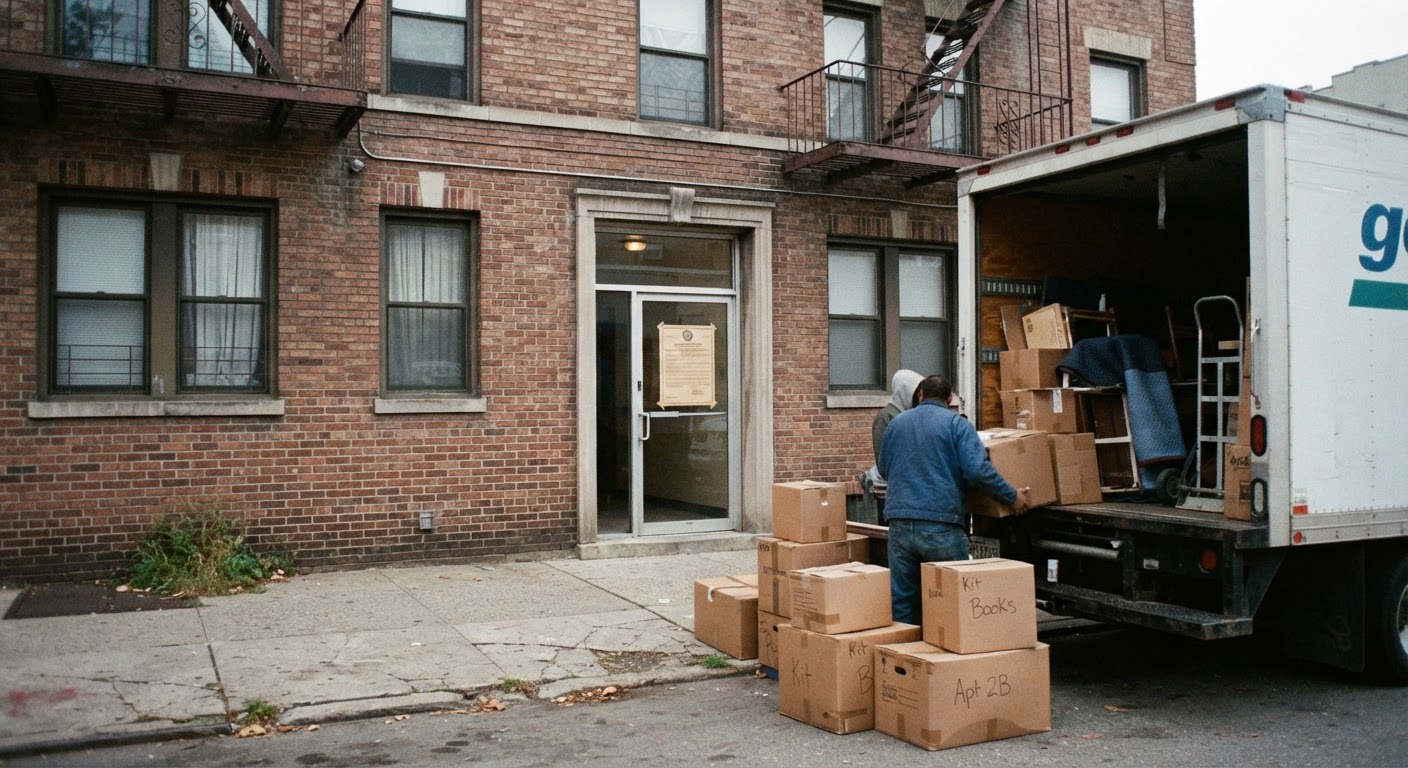
If a sheriff, marshal, or constable has already posted a move-out date on your door, this is the final stage of the eviction process. It means a judge signed an order and law enforcement has scheduled the physical removal. Unlike earlier notices in the process, this date is not something you can negotiate away by paying rent late, promising to leave “soon,” or asking for more time at the door. In most jurisdictions, once this posting happens, the only things that stop it are a court order (filed before the date, not on it) or the landlord voluntarily calling it off. Neither is common at this stage.
The amount of notice you get on the posted date varies by location, but it is typically measured in a small number of days, not weeks. Some jurisdictions require 24 to 72 hours’ posted notice before the actual lockout; others allow the sheriff to return on the exact date listed with no additional grace period. If you’re unsure whether your specific notice allows for any buffer, call your local court clerk’s office or a tenant helpline today, not tomorrow. Do not assume you have more time than what’s written on the paper. The single biggest mistake people make at this point is treating the posted date as a soft deadline. It is not.
What the sheriff or process server can and cannot do on move-out day
In most jurisdictions, the sheriff’s role is to enforce the court’s order, not to negotiate, mediate, or explain your legal options. On the scheduled day, expect them to arrive, verify the address, and require that you and your belongings be out. Some jurisdictions allow the sheriff to physically supervise the landlord or a moving crew removing your things if you haven’t left; others simply confirm you’re out and leave enforcement of belongings to the landlord afterward. This varies enough by location that you should not assume either version — call ahead if you can.
What the sheriff generally cannot do: forcibly remove you at gunpoint, use unnecessary force if you’re complying, or allow the landlord to shut off utilities or change locks before the scheduled time. They also typically cannot evict people who aren’t named on the court order — if a roommate, adult child, or partner wasn’t part of the case, ask about this specifically, since local rules differ.
If you’re still inside when they arrive, stay calm and cooperative. Arguing at the door doesn’t stop the process and can escalate into a police matter that makes everything harder. If you believe there’s been a legal error — wrong address, wrong person, a stay that was filed but not received — say so clearly and calmly, but don’t expect the sheriff to resolve it on the spot. That has to go through the court, and by move-out day, that window is nearly closed.
Your belongings: what happens if you can’t move everything in time
This is one of the most common fears people have, and the answer depends heavily on local law. Some jurisdictions require the landlord to store your belongings for a set period and allow you to retrieve them later for a fee. Others allow landlords to set items at the curb the same day. A few places split the difference — the landlord must inventory and store items briefly, but isn’t required to do so indefinitely or for free.
Because this varies so much, ask the sheriff’s deputy directly, on the spot, what happens to anything left behind under your local rules. Write down the answer. If there’s a storage or holding period, get the location and how to retrieve items, and note any deadline for pickup — many storage periods are short, and missing that window can mean losing everything permanently.
If you have any advance notice at all — even a few hours — prioritize what goes with you in this order: identification documents, medications, phone and charger, any cash or valuables, court paperwork related to the eviction, and anything irreplaceable like family photos or children’s essentials. Furniture and most household goods can potentially be replaced or retrieved later; documents and medication usually can’t be replaced quickly.
Same-day emergency shelter and transitional housing options to call first
Don’t wait until you’re standing outside to start making calls. If you know the date is set, start this process the day before if at all possible.
Call 211 first if that service operates in your area — it’s a free helpline that connects people to local emergency shelter, domestic violence safe housing, and transitional housing programs, and the person answering can often tell you same-day availability rather than making you call each shelter individually. If 211 isn’t available where you are, search for your city or county name plus “emergency shelter” or “homeless services coordinated entry” — most regions have a single intake point rather than dozens of separate shelters to call one by one.
If you have children with you, mention this immediately when you call — many shelters have family-specific space that’s separate from general adult shelter and fills differently. If domestic violence is any part of your situation, say that too; those shelters often have confidential locations and different intake processes that move faster for safety reasons.
If shelters in your immediate area are full, ask specifically about motel voucher programs — some counties and charities fund a night or two in a motel while longer-term shelter space opens up. This isn’t available everywhere, but it costs nothing to ask.
Storing belongings cheaply or free for a few days
If you have more belongings than you can carry but nowhere to put them yet, a few options can buy you a few days without paying for a storage unit contract.
Some churches, mutual aid groups, and community organizations offer short-term storage space for people in exactly this situation — a call to 211 or a local community action agency can point you to one. Storage unit companies occasionally offer a free first month as a promotion; if you go this route, read the cancellation terms before signing anything, since some require 30-day notice to end the lease even if you only need a few days.
Friends, extended family, or even a coworker’s garage can work as a short-term bridge — it’s worth asking even if it feels uncomfortable. If you have a car, storing essential items inside it briefly (in cold or mild weather, never in extreme heat) is a real short-term option many people use.
Documenting the move-out in case of disputes over damage or missing property
Before you leave, or as soon afterward as you safely can, document the condition of the unit and your belongings. Take photos or video of every room, any damage that was already there, and the general state of things as you leave. If items are left behind because you ran out of time, photograph what’s left and note the time.
Get the name and badge or ID number of the sheriff’s deputy or officer present, and write down the exact time they arrived and left. If a landlord or moving crew handles your belongings, note their names if given, and photograph anything they remove or discard.
If a dispute comes up later — over a security deposit, damage claims, or missing property — this documentation is often the only evidence you’ll have. Send yourself an email with the photos and a written timeline the same day, so there’s a timestamped record separate from your phone.