Why propane and oil customers fall outside typical utility shutoff rules
If you heat with electricity or natural gas from a regulated utility, there are usually rules that slow down a shutoff — notice periods, weather-related moratoriums, payment plan requirements. Delivered fuel doesn’t work that way. Propane and heating oil companies are private businesses selling you a product, not a regulated utility providing an ongoing service. There’s no pipe connecting you to them that they have to keep open. There’s no shutoff to protect against, because the “shutoff” already happened the moment your tank ran dry.
This means a propane or oil company can simply decline to deliver to you if you owe money, if your account is new and unverified, or if they’re slammed with other customers and you’re not on their route that week. There’s no regulator you can call to force an emergency delivery the way you might dispute an electric shutoff. That’s the hard truth driving this article: you have to be proactive, and you have to know exactly who to call, because “the company has to help me” is not a rule that applies here.
The flip side is that because delivered fuel is treated differently, there are separate assistance programs and emergency mechanisms built specifically for people in your situation. They’re just less visible than utility hotlines, so most people don’t find them until they’re already out of fuel and cold.
Emergency fuel assistance programs that cover delivered fuel, not just utility bills
Every state has some version of a low-income heating assistance program, and nearly all of them include a specific track for delivered fuels like propane, heating oil, kerosene, and wood pellets — not just electric and gas utility bills. These programs often have an emergency or crisis component separate from the regular seasonal application, meant for exactly your situation: tank at or near empty, no delivery scheduled, cold weather on the way.
The crisis benefit typically works by issuing a payment or voucher directly to a participating fuel dealer, who then schedules your delivery. You usually don’t handle the money yourself. To move fast, call your local Community Action Agency or the state energy assistance office and say specifically: “My tank is empty, I have no delivery scheduled, and I need emergency fuel assistance.” Using that language helps the person on the phone route you to the crisis process instead of the slower general application queue.
Have ready: your name and address, the name of any propane or oil company you’ve used before, a rough estimate of how many gallons your tank holds, and proof of income if you have it nearby — though many crisis programs let you start the process before all paperwork is in hand. Some programs also have limited emergency funds through local charities, religious organizations, or county human services departments that can supplement or move faster than the state program, especially on nights or weekends when state offices are closed.
If you’re a caseworker or shelter staff member making these calls on someone’s behalf, ask directly whether the office has an after-hours emergency number or an on-call caseworker for fuel crises. Many do, but it’s not always advertised.
How to get a same-day or next-day emergency delivery when you’re a new or delinquent customer
Assistance programs move money, but you still need a dealer willing to show up. If you owe your current propane or oil company, call them anyway and ask specifically for the “emergency” or “will-call” delivery process — many dealers keep a separate, faster track for customers who are completely out, distinct from their routine delivery schedule. Ask if a partial delivery is possible if you can pay something now, with the balance covered by an assistance voucher once approved.
If your current dealer won’t deliver, start calling other local dealers immediately rather than waiting on one company. Delivered fuel is a competitive local market, and a company with no history with you may take a new customer with cash or a card in hand faster than your old company will restore an account with a past balance. Ask new dealers directly: “Do you have any emergency or same-day delivery slots today?” Some maintain a short list specifically for exactly this situation.
If you’re approved for emergency assistance but the voucher or payment hasn’t processed yet, ask the assistance office if they can call the dealer directly to guarantee payment, or fax/email a confirmation. That single call from the agency to the dealer often unlocks a delivery that a client alone couldn’t get moving on their own.
Safe temporary heat options while you wait, and what to avoid
While you’re working the phones, you need to stay warm without creating a new emergency. Close doors to unused rooms and concentrate everyone in one space. Layer blankets and clothing, and use towels or rolled fabric to block drafts under doors and around windows.
If you have electricity, a space heater rated for indoor use is the safest backup option — plug it directly into a wall outlet, never an extension cord or power strip, and keep it at least three feet from anything flammable, including bedding and curtains. Never leave it running unattended or while you sleep.
Do not run a generator, camp stove, charcoal grill, or any other fuel-burning device indoors or in an attached garage under any circumstances. These produce carbon monoxide, which is invisible, odorless, and can be fatal within a closed space in a short amount of time. Do not use your gas oven as a heat source. If you have a carbon monoxide detector, check that it’s working now, before you improvise any heat source, not after.
If temperatures are dangerously low and you can’t secure heat quickly, consider whether staying somewhere else for a night or two — a family member, a warming shelter, a motel if you have any funds — is safer than waiting it out at home. This is a short-term bridge, not a defeat; the goal is getting through the gap safely while the fuel and assistance pieces come together.
Building a backup plan so you’re never caught at zero again
Once the immediate crisis is resolved, put a few safeguards in place. Ask your fuel dealer about automatic delivery based on estimated usage rather than will-call ordering, so deliveries happen before the tank runs low instead of after you notice it’s empty. Many dealers also offer budget payment plans that spread annual fuel costs into smaller monthly payments, which can prevent the kind of large past-due balance that leads to a dealer refusing service.
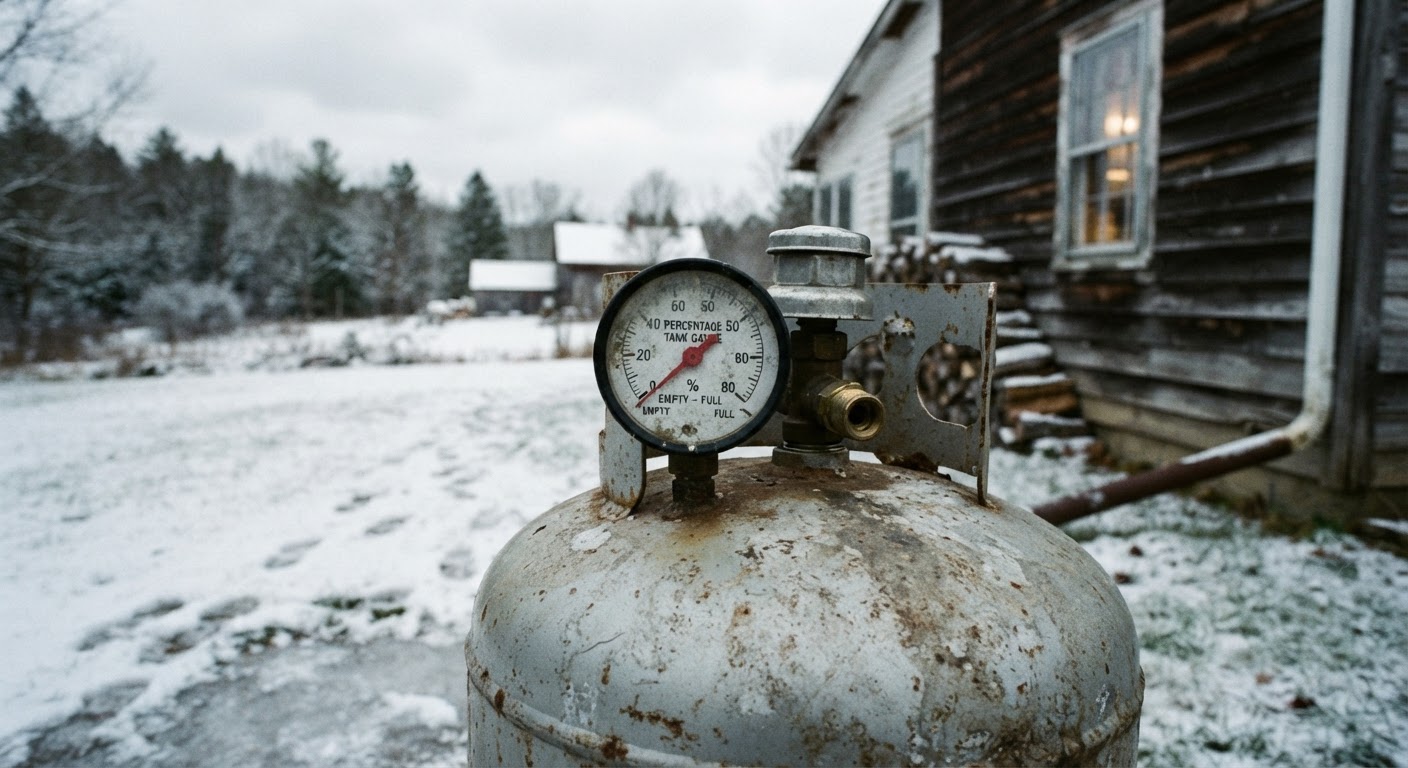
Apply for the regular seasonal heating assistance program early in the season rather than waiting for a crisis — approval before you’re at zero means funds are already in place when you need a delivery. Keep a small tank gauge or float indicator visible if your tank has one, and check it weekly during heating season rather than relying on guesswork.
Finally, keep a written list of two or three backup fuel dealers, your state assistance office number, and your local Community Action Agency number somewhere easy to find — a kitchen drawer, a phone contacts note. The fastest emergency response is one where you’re not searching for who to call while you’re already cold.