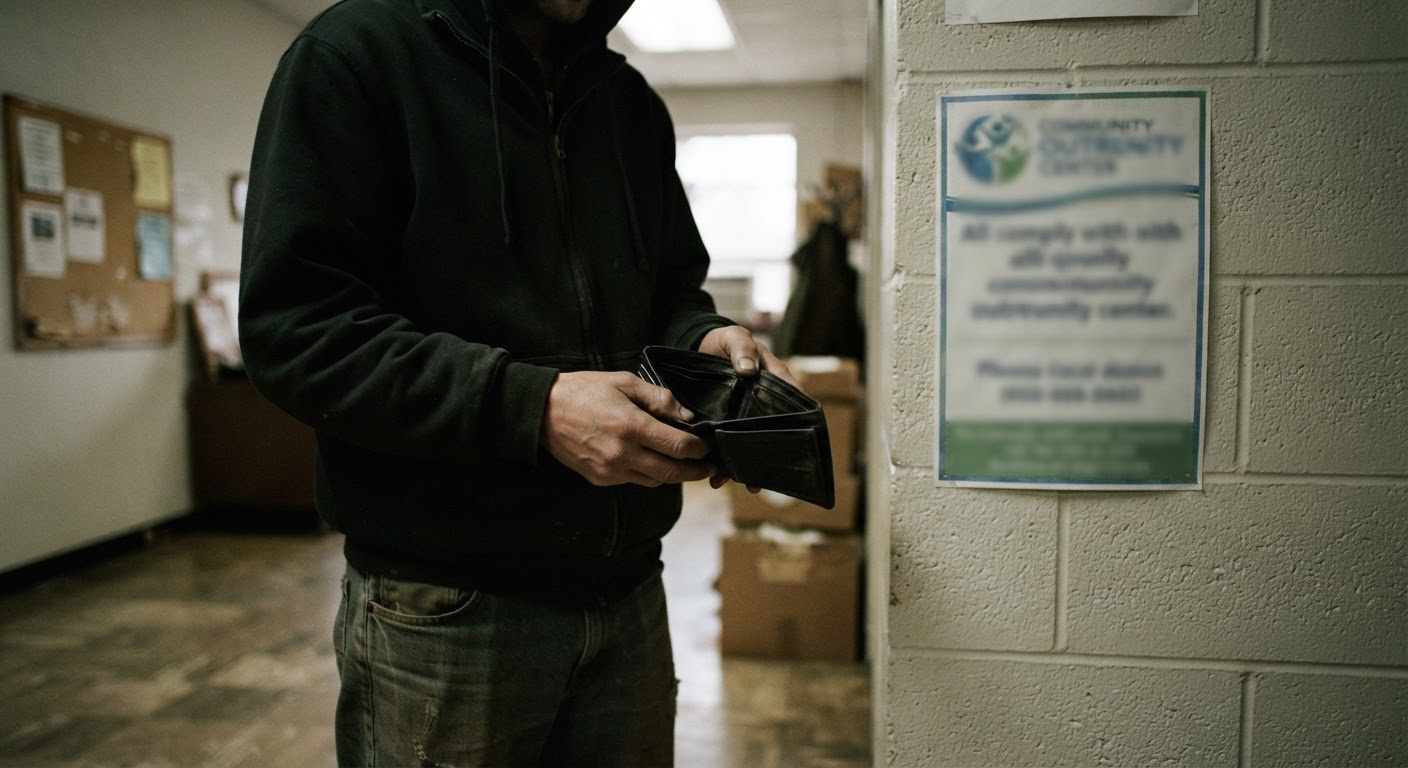
Most people in crisis stop themselves before they even ask for help. They assume that without a driver’s license, a lease, or a bank account, they won’t qualify for anything – so they don’t call, don’t walk in, don’t apply. That assumption is wrong more often than it’s right. Emergency food, cash assistance, and crisis programs are built, at least in part, for people who have already lost the paperwork trail. If you’re holding an eviction notice, a shutoff warning, or a bill you can’t pay and you also don’t have ID or a fixed address, there is still a path forward. Here’s how to walk it.
Why agencies often require far less documentation than people assume
Programs designed for long-term benefits – things like housing subsidies or certain insurance programs – tend to ask for a lot of paperwork because they’re verifying eligibility for ongoing support. Emergency and crisis-response programs work differently. Their whole purpose is to catch people at the moment they have nothing, so the intake process is usually built around self-declaration first and verification later, if at all.
That means a caseworker or pantry volunteer is often trained to take you at your word about your name, your situation, and your need. Many emergency food programs, warming centers, and cash-assistance funds run on federal or private funding that specifically prohibits turning someone away for lack of ID. Staff at these programs see undocumented, unhoused, and recently-displaced people constantly. Asking “what do I do if I have no ID” is not an unusual question to them – it’s a normal Tuesday.
The practical takeaway: don’t pre-screen yourself out. Call or show up and let the actual staff tell you what they need. Assume the bar is lower than you think, because for most emergency programs, it is.
Food pantries and meal programs that never ask for ID
Emergency food is the easiest resource to access with zero documentation, and it’s worth using even if your bigger problem is cash or housing – taking food off your list of worries frees up money and mental space for the harder problems.
Food pantries run through churches, community centers, and local food banks almost universally operate on a no-ID, no-questions basis. Some ask you to sign a log with your name and household size for reporting purposes, but a name you give verbally is typically enough – they are not checking it against anything. Soup kitchens and community meal programs go a step further and often require nothing at all, not even a signature, because they’re serving food on-site rather than distributing groceries to take home.
School-based programs matter here too if you have kids: backpack programs and weekend meal sites run through schools generally don’t require enrollment paperwork on the spot, just a request. And mobile food pantries – trucks or vans that park in a neighborhood on a schedule – are built for exactly this situation, since the people they’re designed to reach frequently don’t have a fixed kitchen or address to receive deliveries.
If you’re not sure where the nearest one is, a two-minute call to 211 (more on that below) will usually get you an address and hours for same-day food, no eligibility screening required.
Cash assistance and voucher programs that accept a shelter or outreach address
Losing a fixed address feels like it should disqualify you from cash help, but most emergency assistance funds anticipated this problem when they were designed. What they need is a way to reach you, not proof that you have a lease.
Shelters, outreach centers, and some churches will let you use their address as a mailing address for benefit correspondence, checks, or vouchers. This is common enough that shelter staff usually know the process without being asked twice. If you’re working with a street outreach worker or a caseworker at a drop-in center, they can often provide their own program’s address for the same purpose, and some will personally walk a voucher or check request through on your behalf.
Local emergency assistance funds – run through community action agencies, United Way chapters, or faith-based charities – typically ask for a name, a way to contact you, and a description of the emergency. A phone number that goes to a shelter’s front desk or a case manager’s line is usually acceptable. Utility assistance programs and rental assistance funds that move quickly (as opposed to the months-long subsidized housing waitlists) are generally more flexible on documentation because their whole model is designed around emergencies, not long-term verification.
If a specific program tells you they can’t help without a permanent address, ask directly whether a shelter, outreach center, or P.O. box will work instead. Often the answer is yes, and the first no you hear is just someone reciting a general policy rather than the actual rule.
How to get a free replacement ID fast when you need one for later steps
You can get through food and many cash-assistance programs without ID, but at some point – opening a bank account, applying for a job, or accessing certain benefit programs – you’ll likely need one. The good news is that replacing a lost ID is usually more about persistence than money.
Many states and counties have a fee waiver or reduced-fee process for people who are experiencing homelessness or extreme financial hardship, though the exact form and name of that waiver varies by location. A caseworker, shelter staff member, or social worker can often tell you what your local DMV or vital records office requires and may be able to write a letter confirming your situation, which some offices accept in place of a permanent address.
If you don’t have a birth certificate or other backup document, start with your state’s vital records office – they can usually issue a certified copy even if you have no other ID yet, using other identifying information like your social security number or a family member’s confirmation.
This step takes time, sometimes more than a day, so it’s usually best to start it in parallel with getting emergency food and cash help rather than waiting until you “need” it. Ask a caseworker to help you start the replacement process even during your first visit – it’s one of the most valuable things they can do for you beyond the immediate crisis.
Using 211 and local outreach workers to skip the paperwork bottleneck
If you only do one thing after reading this, make it this: call 211. It’s a free, confidential referral line that operates in most areas, and the people who answer are specifically trained to route people with no ID, no address, and no money toward the right local resource – often the same day.
Tell the person who answers exactly what you told yourself was a dead end: “I have no ID, no fixed address, and I need food/cash/help with a bill by [date].” They will not be surprised, and they will not ask you to justify it. They’ll typically give you a short list of specific places to go, sometimes with a contact name, and can tell you in advance what each place will and won’t require from you.
Outreach workers – the staff who work directly with unhoused or crisis-level populations – are worth finding even outside of 211, because they often carry relationships with local agencies that let them vouch for you informally. A phone call from an outreach worker saying “I’m sending someone your way, they don’t have ID” frequently moves faster than you walking in cold. If there’s a day center, drop-in shelter, or street outreach team in your area, connecting with them once can make every subsequent step easier, because you’re no longer starting from zero each time.