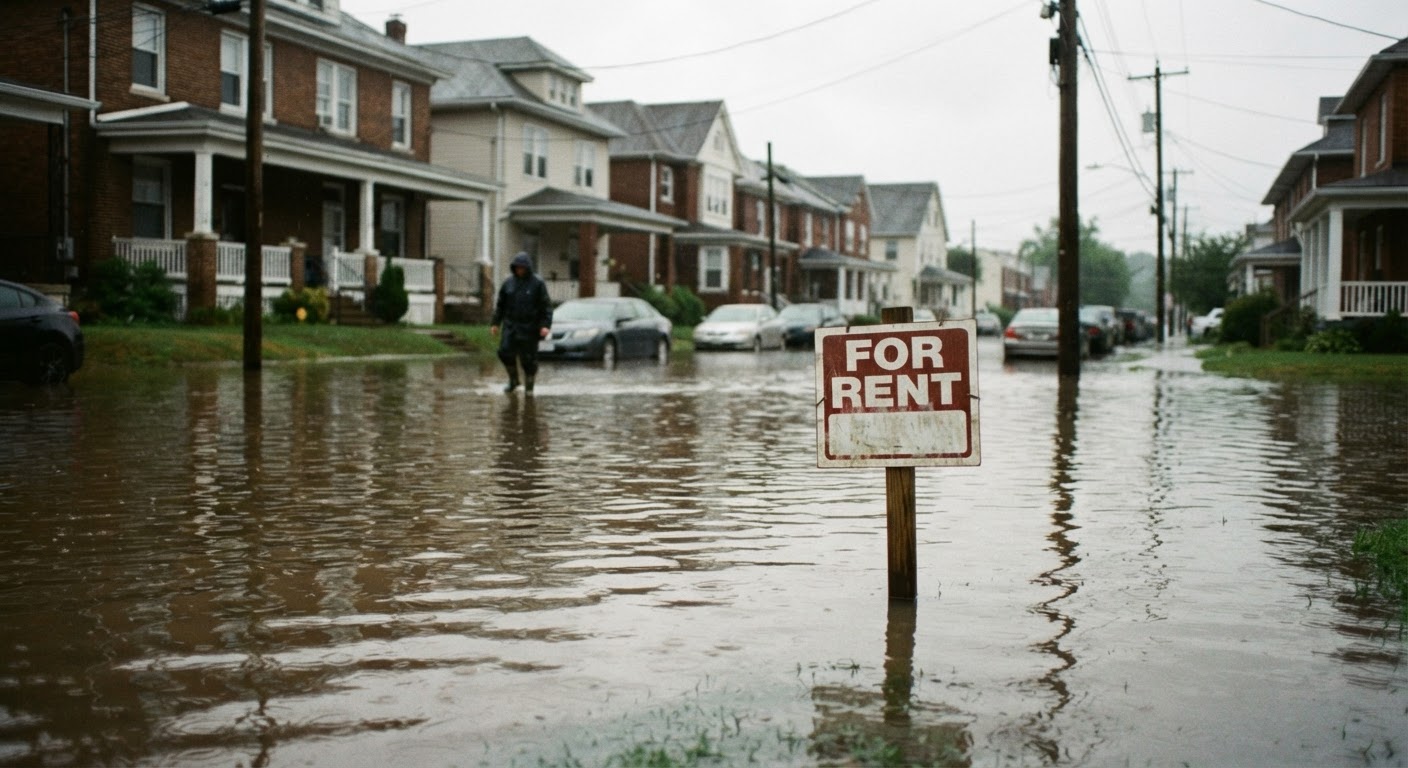
How disaster declarations can pause or delay eviction filings
When a hurricane, wildfire, flood, or other disaster hits, governments at different levels can issue emergency declarations. Those declarations sometimes come with temporary rules that slow down or pause eviction cases — but the protection isn’t automatic just because a disaster happened nearby. It depends entirely on what the specific declaration says.
Some declarations suspend court operations temporarily, which can delay eviction hearings simply because courts are closed or operating on limited schedules. Others go further and specifically prohibit landlords from filing new eviction cases, serving notices, or enforcing existing eviction judgments for a set window of time. Still others do nothing about eviction at all and focus only on things like utility shutoffs or price gouging.
This means two people in neighboring counties hit by the same storm can have completely different protections. One county might have a court-ordered pause on eviction filings for 30 days. The next county over might have nothing. The disaster itself doesn’t create a right — the specific order does, and only for as long as that order stays in effect.
If you’re facing eviction and a disaster has just been declared in your area, don’t assume you’re covered. Assume nothing until you’ve confirmed it in writing.
Where to check if your state or county issued emergency housing protections
Start with your state’s official emergency management website. States typically post active declarations and any accompanying executive orders there, including whether housing or eviction protections are included. Search for the declaration by name or date and read the actual text, not just news summaries — news coverage often simplifies or gets details wrong about who’s covered and for how long.
Next, check your local court system. Many eviction protections during disasters come from court administrative orders rather than the governor’s office. Your county or city court’s website, or a call to the court clerk, can tell you whether eviction filings or hearings are currently paused in your jurisdiction.
Also check with your city or county government directly. Some municipalities issue their own local emergency orders that add protections beyond what the state has done, especially in areas that were hit hardest.
Legal aid organizations serving your area are often the fastest way to get a clear, current answer. They track these orders closely because their clients depend on it, and they can tell you not just whether a protection exists but how it’s actually being applied in practice. If you’re not sure which legal aid group covers your county, a call to a local shelter, disaster case management hotline, or 211 referral line can usually point you in the right direction.
Write down what you find — the name of the order, the date it was issued, and what it says about eviction. You may need to show this to a landlord, a court, or a caseworker later.
Documentation you need if your unit was damaged by the disaster
If the disaster damaged your home, start documenting immediately, even if you’re staying elsewhere temporarily. Photos and video of the damage, taken as soon as it’s safe to do so, are the foundation of everything else — repair requests, insurance claims, FEMA applications, and any housing-related dispute with your landlord.
Keep copies of any communication with your landlord about the damage: texts, emails, or notes from phone calls, including the date and what was said. If you reported unsafe conditions and nothing was done, that record matters.
Save any inspection reports from local code enforcement, fire department, or emergency management officials who assessed the property. If the unit was declared uninhabitable, get that documentation in writing if at all possible.
Keep receipts for anything you paid for because of the damage — temporary lodging, replacement of damaged belongings, cleanup supplies. Even if you’re not sure yet whether you’ll be reimbursed through insurance or disaster assistance, receipts are much easier to produce now than to reconstruct months later.
If you had to relocate, keep a record of where you’re staying and how to be reached. Some disaster housing programs and legal aid follow-up depend on being able to reach you after you’ve left the damaged unit.
How FEMA assistance interacts with rent owed to your landlord
FEMA disaster assistance and rent owed to your landlord are two separate tracks, and it’s important not to assume one automatically resolves the other. FEMA’s Individual Assistance program can help with things like temporary housing costs, essential home repairs, or other disaster-related needs, but it does not automatically pay off back rent you owed before the disaster, and it isn’t sent directly to your landlord as rent payment in most cases.
If you receive FEMA assistance for temporary housing because your unit is uninhabitable, that money is meant to cover your immediate housing costs during displacement — not necessarily to settle a dispute over rent for a unit you can’t currently live in. Whether you still owe rent on a damaged, uninhabitable unit is a separate question that depends on your lease, your state’s landlord-tenant law, and any emergency housing order in effect.
Don’t wait on a FEMA determination before communicating with your landlord. If you believe the disaster affected your ability to pay rent or made the unit unlivable, say so in writing as soon as possible, and ask your landlord directly how they intend to handle rent for the affected period. Keep a copy of that message.
If you’re applying for FEMA assistance, apply as soon as you’re able. Processing takes time, and delays in applying only push out when help might arrive.
What to do if your landlord tries to evict you anyway during the emergency window
If you have a documented eviction protection in place — a court order, a state emergency declaration, or a local ordinance — and your landlord files or tries to enforce an eviction anyway, don’t ignore any notice or court paperwork you receive, even if you believe it’s not allowed. Ignoring it can still result in a default judgment against you.
Bring your documentation of the applicable protection to court or to your local legal aid organization immediately. Courts generally want to know if there’s an active order that affects the case in front of them, but you may need to be the one who raises it.
Contact legal aid or a tenant helpline the same day you’re served with any eviction paperwork, not after the deadline listed on the notice. Many protections have specific procedures for asserting them, and missing a deadline can undercut an otherwise valid defense.
If you’re staying in a shelter or working with a caseworker, let them know what’s happening. They may have direct contact with local legal aid attorneys who are already tracking disaster-related eviction cases in your area and can move faster than starting from scratch.
Above all, get the specific order or declaration in front of a person who can act on it — a court clerk, a legal aid intake worker, or an attorney — rather than relying on your own read of what it means. Emergency housing protections are often narrow, time-limited, and technical, and how they apply to your exact situation is something a person with current, local knowledge needs to confirm.