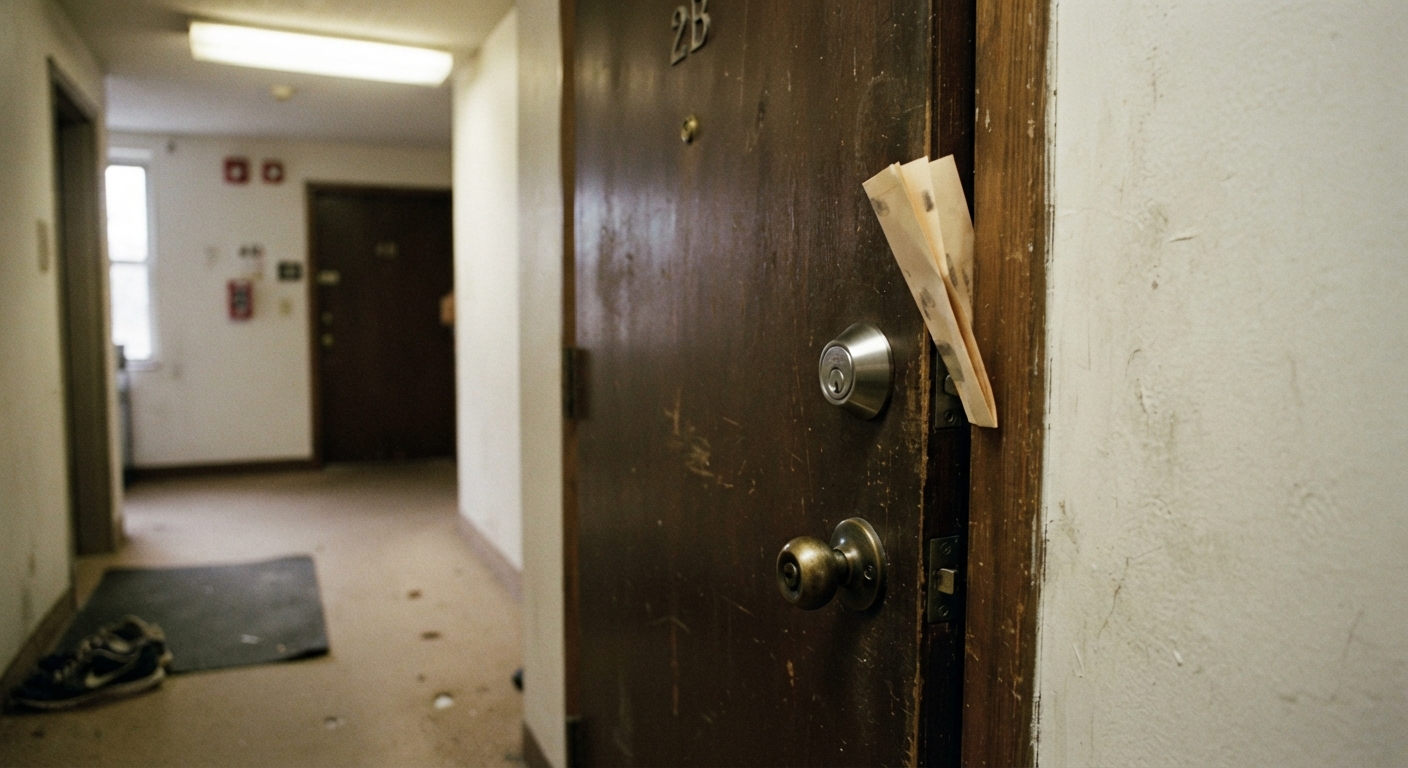
If you’ve come home to find your key doesn’t work, your belongings on the curb, or a padlock on the door, take a breath first. In almost every U.S. state, what your landlord just did is illegal — regardless of how much rent you owe or what your lease says. This is called a “self-help eviction,” and the law generally requires landlords to go through court, not around it. That means you likely have a real, same-night path back into your home. Here’s how to move through the next few hours in the right order.
Why locking you out without a court order is illegal almost everywhere
Landlords are not allowed to evict tenants by changing locks, shutting off utilities, removing doors, or hauling belongings out, no matter how far behind on rent someone is. Eviction is a legal process that has to go through a court, and that process exists specifically so a neutral judge — not the person you owe money to — decides whether and when you have to leave. Skipping that step and taking matters into their own hands is what’s known as a “self-help” or “illegal lockout,” and it’s prohibited in nearly every state.
This holds true even if:
- You’re behind on rent, sometimes by a lot
- Your lease has expired or you never signed a written lease
- The landlord left a notice on the door before locking you out
- You’ve had prior disputes or complaints about the unit
None of that gives a landlord the right to physically remove you without a judge’s order carried out by a sheriff or constable. The specific penalties and remedies vary by state and even by city, so this article won’t tell you how a judge will rule in your case — but the baseline principle, that landlords cannot evict without going to court first, is close to universal. If you want to confirm the exact rule where you live, your state’s attorney general website or a local tenant rights organization can tell you in a few minutes.
Call the non-emergency police line and document everything now
Your first call should be to your local police department’s non-emergency number. In many jurisdictions, officers can respond to an illegal lockout and either order the landlord to let you back in that night or document the scene so you have an official record. Police response to lockouts varies by department, so don’t be surprised if the response is more “here’s your case number” than “here’s your key” — either outcome is useful.
Before or during that call, document the situation as thoroughly as you can:
- Photograph the door and lock — the new hardware, any notice taped up, the general condition of the entrance
- Photograph or note any belongings left outside, damaged, or missing
- Save any texts, emails, or voicemails from the landlord, especially anything mentioning the lockout, back rent, or a deadline
- Write down the exact time you discovered you were locked out, and the names of any witnesses — a neighbor, a friend who came with you, anyone
- Get the officer’s name and report number if police do respond, even if they can’t resolve it on the spot
This isn’t about building a legal argument tonight. It’s about creating a timestamped record while the details are fresh, in case you need it for a housing court filing, a legal aid intake, or a police follow-up in the coming days.
Reach a same-day tenant hotline or legal aid emergency line
After police, your next call is to a tenant rights hotline or legal aid organization that handles emergency housing issues. Many cities and states fund a tenant helpline specifically for situations like this, and legal aid offices typically have some kind of same-day or next-morning emergency intake for active lockouts, since courts recognize these as time-sensitive.
To find the right number fast:
- Search “[your city or county] tenant hotline” or “[your state] legal aid eviction emergency”
- Call 211 — the nationwide referral line can often connect you directly to housing crisis resources and read off the current local hotline number
- If you’re already in touch with a shelter, caseworker, or housing counselor, ask them directly — many keep an emergency tenant law contact on hand for exactly this scenario
When you get someone on the phone, lead with the essentials: “My landlord changed the locks without a court order and I need emergency help getting back into my home tonight.” Legal aid staff hear this often and will usually know within minutes whether an emergency motion or a call to the landlord on your behalf is the right next move. If the local office is closed, ask if they have an after-hours emergency line or a partner organization that does — many do specifically because lockouts don’t happen on a schedule.
Have this ready before you call anyone
Whoever you speak with — police, a hotline, legal aid — will move faster if you can hand them a few pieces of information right away. Gather what you can before you dial:
- Proof you live there: a copy of your lease, a piece of mail addressed to you at that address, a utility bill in your name, or even a driver’s license listing the address
- Proof of rent payment history: bank statements, money order receipts, canceled checks, or a payment app history showing what you’ve paid and when
- The landlord’s name and contact information, and the property manager’s if there is one
- Any written communication about the lockout, back rent, or notice to vacate
- A list of what’s inside if you can’t get in, especially medication, identification documents, or anything needed for work the next day
If you don’t have all of this, don’t wait to gather it before calling — call first, and mention what you do have. Hotline staff and officers are used to people showing up with partial paperwork in the middle of a crisis; something is almost always enough to start.
What happens next
Depending on your state and how quickly you reach the right people, one of a few things typically happens: police mediate on the spot and the landlord lets you back in, legal aid files an emergency motion the next business day to force re-entry, or you’re advised to stay with a friend, family member, or shelter for a night while the legal process catches up. None of these outcomes means you’ve lost your housing — an illegal lockout doesn’t erase your rights to the unit, and acting fast tonight preserves your position no matter which path it takes.
If you’re a caseworker, shelter staff, or family member helping someone through this, your most useful role right now is making the calls with them and holding onto the documentation — a clear head and a phone that’s actually being dialed matters more in the next hour than anything else.