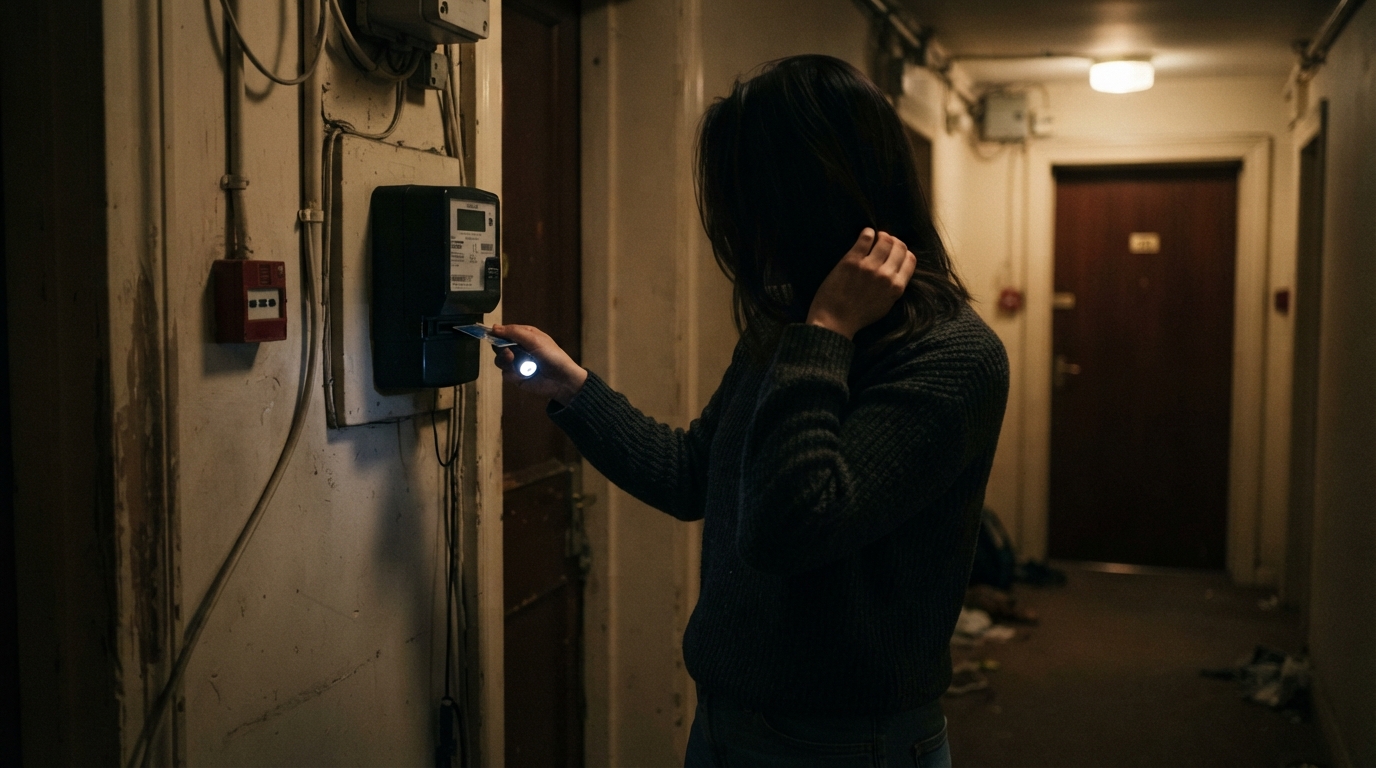
How prepaid meters differ from standard shutoff notices
If you’re used to traditional utility billing, this catches almost everyone off guard the first time. With a standard account, a missed payment triggers a warning letter, then a shutoff notice, then usually a grace period before anyone actually cuts your service. Prepaid meters skip all of that. There’s no notice because there’s no missed payment to flag — you simply spent down the balance you loaded, and when it hits zero, the power or gas stops. No letter in the mail, no phone call, no 24-hour warning. One minute the lights are on, and the next they’re not.
This isn’t a punishment or a mistake on the utility’s part — it’s how the system is designed to work. Prepaid metering exists specifically so the utility doesn’t have to chase down debt or send collections notices. The tradeoff is that the responsibility to track your balance falls entirely on you, and when life gets chaotic — a missed check, a hospital stay, a broken phone you use to check your balance — it’s easy for that number to hit zero without warning.
The good news is that because these systems are automated, they often come with built-in cushions and emergency options that traditional accounts don’t have. You just have to know where to look, and you need to move fast tonight rather than wait for business hours tomorrow.
Emergency credit or “friendly hours” most utilities offer before full cutoff
Many prepaid meter systems include a feature often called “emergency credit,” “friendly credit,” or “emergency reserve.” When your balance drops to zero, the meter may automatically extend you a small amount of additional credit rather than cutting service instantly. This is usually a fixed dollar amount that gets deducted first the next time you top up, so it’s not free power — it’s a short-term loan built into the meter itself.
Some meters also have “friendly hours,” which are set windows — commonly overnight, on weekends, or on public holidays — during which the meter won’t disconnect you even if your balance hits zero, specifically so households aren’t left without power when shops and support lines are closed. If your meter has a small screen or indicator light, check it now: many will display a message or flashing signal when emergency credit has been activated, and the meter itself often has a customer service number printed directly on it.
If your power already went out, check whether it’s back on with a smaller flashing balance or warning icon — that may mean emergency credit already kicked in automatically and you’re now on borrowed time rather than starting from a hard cutoff. Either way, don’t wait to top up. Treat any active emergency credit as a countdown, not a fix.
Where to recharge after business hours: apps, kiosks, retail partners
Most prepaid utility programs have moved well beyond the days of only being able to top up at a single office during business hours. Start with your utility’s mobile app or website — many allow instant top-ups by debit card, credit card, or linked bank account, and the credit is applied to your meter within minutes, sometimes instantly. If you don’t already have the app installed, check the paperwork that came with your meter or search your utility’s name along with “prepaid app” to find the right one.
If you don’t have a card or banking app available, look for physical recharge options that stay open late. Many utilities partner with pharmacies, convenience stores, gas stations, or dedicated payment kiosks — often located inside grocery stores or standalone terminals in strip malls — that accept cash and instantly credit your account. These are frequently open 24 hours or at least later than a typical office. Search for “[your utility name] payment locations near me” or call the number on your meter to ask for the nearest one still open right now.
Some regions also support recharge through general bill-pay apps or even text-message-based payment systems tied to your meter number. If a neighbor, family member, or shelter staffer is helping you, they may be able to make the payment remotely using your meter or account number, which means you don’t need to leave home in the cold to fix this.
Calling 211 or your utility’s emergency line for a same-day credit advance
If you have no funds to top up at all tonight, don’t wait until morning to ask for help. Dial 211, a free referral line that connects you to local emergency assistance programs, including utility relief funds that can sometimes issue same-day credit advances or emergency top-ups for prepaid accounts. Explain clearly that you’re on a prepaid meter and currently without power — this is treated differently and often more urgently than a standard past-due account, since there’s no service until credit is restored.
Separately, call your utility’s customer service or emergency line directly. Many providers have a distinct process for prepaid customers who’ve hit zero, including short-term credit advances that get repaid automatically through slightly higher deductions on your next few top-ups. Ask specifically: “Do you offer an emergency credit advance for prepaid accounts, and can it be applied tonight?” Being direct about the exact feature you need tends to get you to the right department faster than describing your general situation.
If you’re a caseworker or shelter staff member calling on someone’s behalf, having the account holder’s meter number, address, and ID information ready will speed things up considerably, since many systems require ID verification for advances.
Medical or life-support exceptions that may apply even on prepaid plans
If anyone in the household relies on electrically powered medical equipment — oxygen concentrators, CPAP machines, dialysis equipment, refrigerated medication, or other life-support devices — say so immediately when you call. Many utilities maintain a medical priority or life-support registry that adds extra protections even to prepaid accounts, including longer emergency credit windows, priority restoration, or exemption from certain disconnection rules.
These protections often need to be requested and documented in advance to take full effect, but even in an active crisis, disclosing a medical need can change how quickly a representative escalates your case. If you haven’t registered before, ask how to do so once you’re stabilized tonight so this doesn’t happen again during a future low-balance moment.
How to switch off prepaid billing once you’re stabilized
Once your power is back on and you’ve had a chance to breathe, it’s worth asking your utility whether you’re eligible to move from a prepaid meter to a standard postpaid account. Eligibility often depends on payment history, deposit requirements, or credit checks, so ask directly what the requirements are in your case rather than assuming you don’t qualify.
If switching isn’t possible right now, ask about setting up balance alerts through text or app notifications so you get a warning before you hit zero next time, since the meter itself won’t send one. A few minutes of setup now can prevent another dark, scrambling night later.