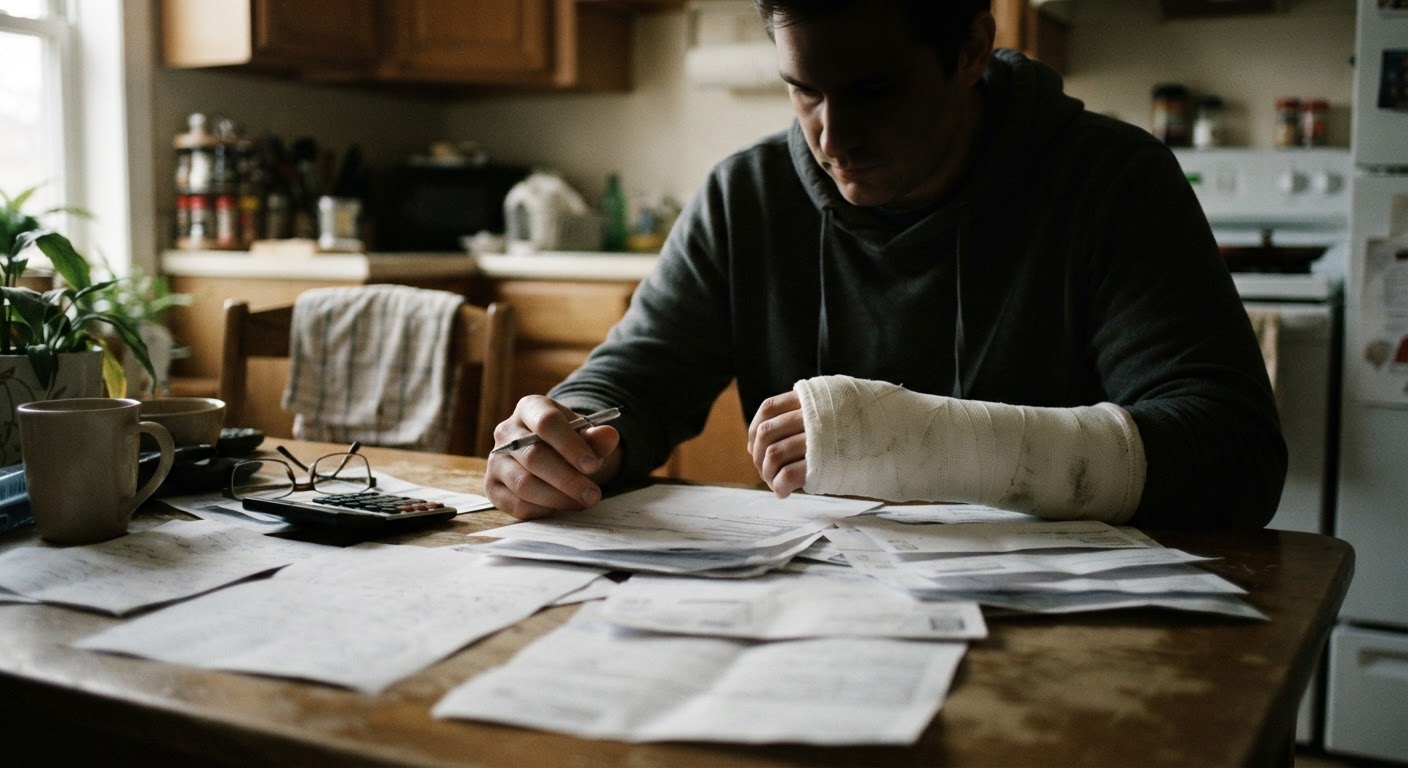
Why disability claims rarely pay fast enough for this week’s bills
If you got hurt and can’t work, the money you’re owed through disability insurance or Social Security is real — but it’s not fast. These systems were built to verify medical conditions, calculate benefit amounts, and confirm you actually qualify. That verification process takes time, usually more time than you have before rent, a car payment, or a utility bill comes due.
This gap between “I’m entitled to benefits” and “the money is in my account” is where a lot of people fall behind on bills they’d otherwise be able to pay. Understanding that gap — and what can bridge it — matters more right now than understanding the fine print of your eventual claim.
Employer short-term disability vs state disability insurance vs SSDI timelines
These three programs are often confused, and they move at very different speeds.
Employer-provided short-term disability is usually the fastest of the three if you have it, since your employer or their insurer already has your employment and pay records. Even so, a first payment often lands weeks after you file, not days. Ask your HR department directly what their typical processing time is and whether there’s a waiting period (“elimination period”) before benefits start — many plans don’t pay anything for the first several days or weeks off work.
State disability insurance, where it exists, works similarly to unemployment insurance: you file a claim, the state verifies your wages and your doctor’s certification, and then payments begin. Processing time varies by state and by how complete your paperwork is when you submit it. Missing information is the single biggest cause of delay, so double-check your claim before submitting rather than after.
SSDI (Social Security Disability Insurance) is the slowest by design. It requires medical evidence review and often a formal determination process that can stretch well beyond your immediate crisis. If you’ve already applied, don’t wait passively — ask whether your condition qualifies for expedited handling (more on that below), and keep copies of everything you submit.
The practical takeaway: know which of these you’re eligible for, file for all of them if you qualify for more than one, and don’t assume any of them will arrive before this week’s due dates.
Emergency cash and food programs that don’t require proof of permanent disability
You don’t need a finalized disability determination to get emergency help right now. Several programs are designed specifically for short-term crises and ask for far less documentation than a disability insurer does.
Local emergency assistance programs, often run through county human services offices or community action agencies, can provide one-time help with rent, utilities, or food while you’re between jobs or income sources. These programs typically ask for proof of income loss and a bill or notice, not a medical diagnosis.
Food assistance programs (often administered at the state level) can usually be applied for based on current household income, which drops the moment you stop working — you don’t need to wait for a disability ruling to qualify. Food banks and pantries have no income paperwork requirement at all in most cases; you can walk in today.
If your injury happened on the job, workers’ compensation is a separate system from SSDI and often moves faster, since it doesn’t require proving long-term disability — only that the injury happened at work and keeps you from doing your job right now. If there’s any chance your injury is work-related, file a workers’ comp claim in addition to anything else, even if you’re not sure it will be approved.
Ask a caseworker or 211-style referral line what’s available in your area — the names and eligibility rules for these programs vary by location, and someone who works in intake can usually tell you within one phone call what you qualify for.
Talking to your landlord and lenders about a temporary hardship pause
While benefits are pending, the goal isn’t to solve the debt — it’s to buy time without making things worse. That means talking to the people you owe money to before you miss a payment, not after.
Call or write your landlord and explain, plainly, that you were injured, you’re out of work, and you have a disability claim in process. Ask specifically for a short-term payment plan or a delay until your first benefit payment arrives. Landlords often prefer a partial payment and a plan over no communication at all, since eviction is slow and costly for them too.
For lenders — car loans, credit cards, medical bills — ask specifically for a “hardship program” or “hardship forbearance.” Use those words; many companies have a formal process for exactly this situation, but it’s not always offered unless you ask by name. Get any agreement in writing, even if it’s just a confirmation email, so there’s no dispute later about what was promised.
Be honest about your timeline. If you don’t know when your claim will pay out, say so, and ask what happens if the delay runs longer than the pause they’ve offered. It’s better to know that now than to be surprised later.
Using presumptive eligibility or expedited SSI for severe conditions
If you’re applying for SSI (Supplemental Security Income) rather than SSDI, ask specifically about presumptive disability payments. For certain severe conditions, Social Security can approve a limited number of payments before your full application is fully processed, specifically to cover an emergency period like the one you’re in now.
Not every condition qualifies, and it’s not automatic — you have to ask, and you may need a caseworker or Social Security representative to walk you through the request. If your condition is severe and clearly disabling on its face, this is worth raising in your very first conversation with Social Security, not something to bring up weeks into the process.
There’s also a separate process for conditions considered so serious that they’re fast-tracked through the full disability determination. If you or your doctor believe your condition might qualify, ask directly whether it fits — the criteria are specific, and Social Security staff can tell you quickly whether it applies to your situation.
Red flags of settlement offers or advances that cost you long-term
When money is tight, offers to “advance” your disability settlement or claim can look like a lifeline. Some of these are legitimate. Many are structured so that the fees and interest eat a large share of the benefit you eventually receive.
Be cautious of any offer that asks you to sign over rights to part of your future settlement or benefit in exchange for cash today, especially if the terms aren’t spelled out in plain numbers up front. Ask directly: what is the total amount I’ll repay, and what happens if my claim is denied or reduced? If the answer is vague or the paperwork is long and rushed, slow down.
The same caution applies to payday-style loans marketed toward people waiting on benefits. These can solve this week’s problem while creating a much bigger one next month. Before signing anything, ask a local legal aid office or caseworker to look at the terms — that’s a free step that can save you from a costly mistake made under pressure.
Waiting on a disability claim is stressful precisely because the timeline is out of your hands. The programs and conversations above won’t replace that income, but they can keep you steady until it arrives.