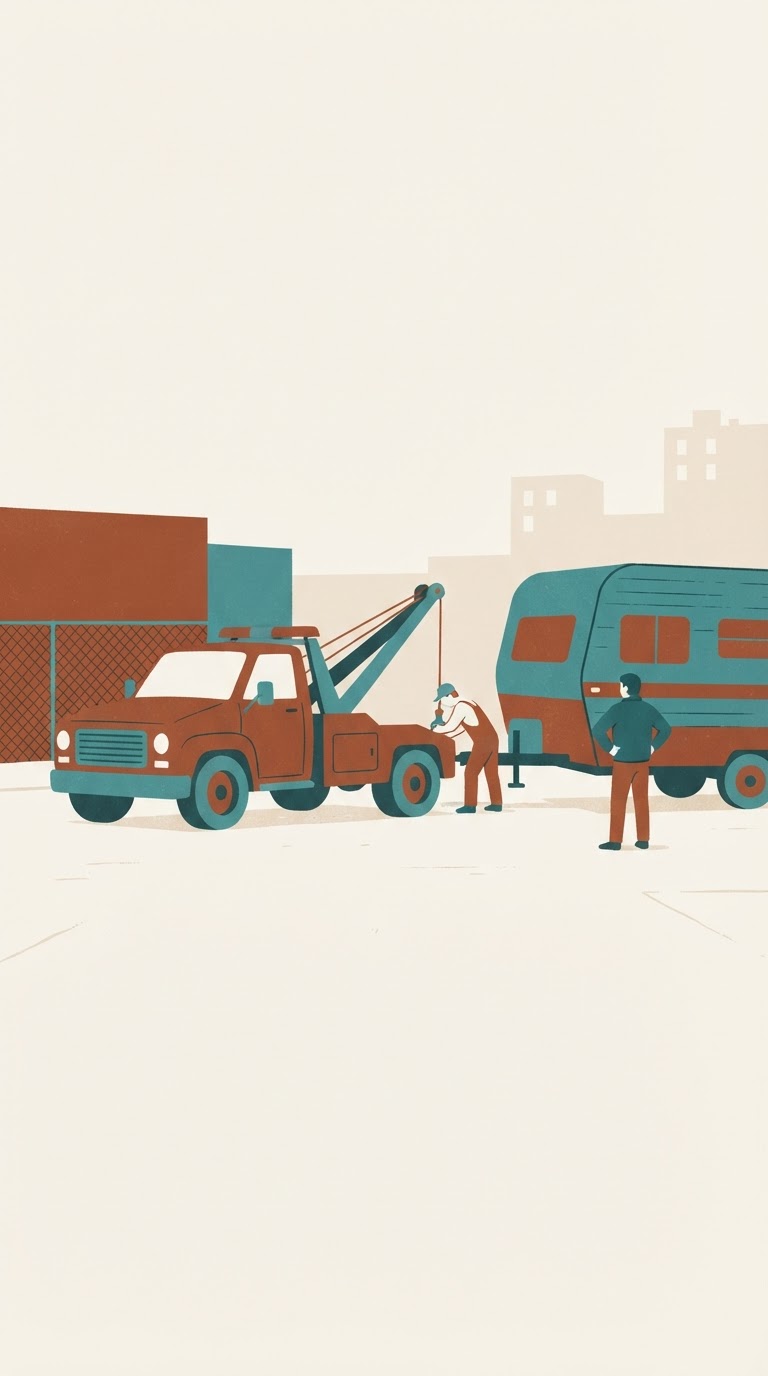
Why lenders often move faster on non-car vehicles
Most people’s mental model of repossession comes from car loans, and it doesn’t transfer cleanly to a motorcycle, boat, camper, or RV. Auto lenders deal in high volume and often give some cushion before repossession starts, partly because cars are relatively easy to resell and partly because state consumer protections around auto lending are well established. Lenders financing motorcycles, boats, and RVs frequently see these as higher-risk, harder-to-resell assets, and that changes their behavior.
Recreational vehicles depreciate fast and have a smaller pool of buyers. A repossessed boat sitting in a marina or a camper taking up space in a storage lot costs the lender money every day it isn’t sold. That pressure pushes some lenders to act on delinquency sooner rather than later, especially once you’re 60 to 90 days behind, instead of waiting the longer stretch a car lender might tolerate.
Seasonal timing matters too. If you’re behind on a boat or RV payment heading into peak season, a lender may move quickly to reclaim and resell it while demand is high. Conversely, if you’re behind in the off-season, they may be less aggressive simply because resale is harder. Either way, the pace is driven by the lender’s resale math, not a fixed script like the one you’d expect with a car.
Titling and registration differences that affect repossession rights
How your vehicle is titled directly affects what a lender can do and how fast they can do it. Motorcycles are usually titled and registered like cars, so repossession there tends to follow familiar rules. Boats and RVs are murkier.
Some states title boats through a marine or wildlife agency rather than the department of motor vehicles, and small boats or trailers may not require titling at all. That affects how a lien is recorded and how a lender proves their right to repossess. If your boat has a nautical or state-issued title with the lender listed as lienholder, the lender’s rights are typically similar to any secured loan. If there’s no formal title, the loan agreement itself becomes the primary document establishing the lender’s claim, which can add steps or delay to the process.
RVs often have a split identity. A motorized RV is titled like a vehicle. A towable camper may be titled as a trailer under different rules, and in some states trailers under a certain weight aren’t titled at all. This matters if you’re trying to understand who has legal claim to the property and how enforceable a lender’s lien actually is. If you’re unsure how your specific vehicle is titled in your state, your state’s motor vehicle or marine licensing agency can tell you directly, and that answer should shape how you respond to any repossession notice.
Storage fees and how they add up fast on boats/RVs
This is where non-car repossessions can get expensive in a hurry. A repossessed sedan goes into a standard tow yard. A repossessed boat or RV often needs specialized storage: a marina slip, a dry-storage rack, or a large lot built for oversized vehicles. Those spaces cost more, and the fees are usually passed to you if you want the vehicle back or if there’s a deficiency balance after resale.
Storage costs accrue daily, and they can quietly outpace the past-due payment that triggered the repossession in the first place. A boat pulled from the water may also need cleaning, winterizing, or battery maintenance while it sits, and some of those service costs get added to what you owe. The longer a vehicle sits in storage, the harder it becomes to catch up, because now you’re not just covering missed payments, you’re covering weeks of accumulating fees on top of them.
If you’re trying to get a boat or RV back after repossession, ask the storage facility directly, in writing, for a current itemized total, and ask how much that total grows per day. This number changes fast, and knowing it lets you act with real information instead of guessing at what reinstatement will cost.
Insurance and liability issues once repossession starts
Once a lender takes possession of your motorcycle, boat, or RV, don’t assume your insurance situation is settled. Many policies terminate or become void the moment you lose possession, but liability questions don’t always disappear as cleanly. If the vehicle is damaged while in a tow yard, storage lot, or in transit, the responsibility for that damage can become a dispute between you, the lender, and the storage or towing company.
Boats carry an extra wrinkle: if a repossessed boat is still in the water rather than hauled out, there can be questions about who is responsible for it if weather damages it, if it takes on water, or if it drifts and causes damage to another vessel or dock. RVs and campers left outdoors face similar exposure to storm damage or vandalism while in a storage lot awaiting resale.
Contact your insurance carrier as soon as repossession starts and ask directly whether your policy is still active and what it covers now that the lender has possession. Get the answer in writing if you can. This isn’t optional cleanup, it’s the step that determines whether you’re on the hook for damage that happens to a vehicle you no longer control.
Steps to negotiate or reinstate before it’s towed or hauled away
Because non-car repossessions move on a faster and more expensive timeline, speed matters even more than it would with a car. Here’s what to do the moment you get a repossession notice or missed-payment warning:
Call the lender before they call you. Ask specifically what it will take to reinstate the loan, meaning paying the past-due amount plus any fees, rather than paying off the full balance. Reinstatement is often available even after a repossession notice goes out, but the window closes the moment the vehicle is actually picked up or sold.
Ask about a temporary payment plan or deferred payment if you can’t cover the full past-due amount right now. Lenders would often rather restructure a few months of payments than absorb the cost of repossessing, storing, and reselling a boat or RV they’ll likely sell at a loss.
If the vehicle has already been picked up, act within days, not weeks. Ask the lender directly whether the vehicle has been resold yet, since some states require notice before a final sale and give you a last window to redeem the vehicle by paying the full balance and fees. Ask the storage facility for the daily cost so you understand what the delay is costing you.
Keep every conversation in writing when you can, whether that’s a follow-up email confirming what was said on the phone or a written request for a payoff and reinstatement quote. If the amount being demanded feels wrong, or you’re unsure whether the lender followed the correct notice process for your state, a local legal aid office or consumer law clinic can review the specifics faster than you’d expect, often at no cost, and can tell you whether anything in the process is worth challenging.