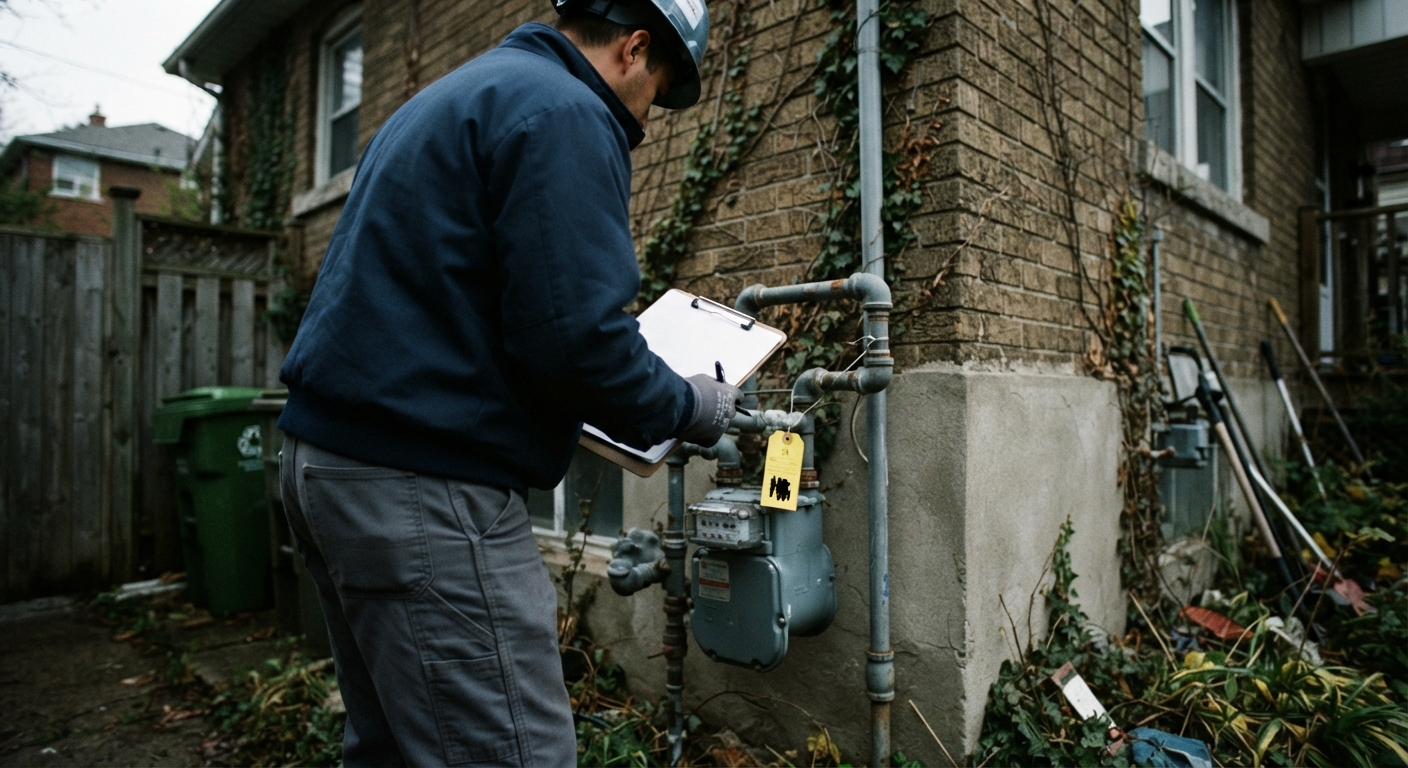
If the gas company told you this was a “safety shutoff” rather than a disconnect for nonpayment, that distinction matters more than it might seem. It changes the rules for how fast they could act, what has to happen before they’ll turn your gas back on, and who’s on the hook to fix the underlying problem. This isn’t a billing dispute. It’s a hazard response, and it follows its own process.
How a safety shutoff differs legally from a nonpayment disconnect
A nonpayment disconnect is a financial action. The utility follows a notice schedule, gives you a chance to pay or set up a plan, and generally can’t cut service without written warning days or weeks in advance. A safety shutoff is a hazard response. It happens when a technician, an inspector, first responders, or even a neighbor’s report suggests there’s a gas leak, a cracked line, corroded piping, a malfunctioning appliance, or another condition that could hurt someone. In that scenario, the utility isn’t collecting a debt. It’s preventing an explosion, a fire, or carbon monoxide poisoning.
Because the legal basis is different, the protections that apply to nonpayment shutoffs, like advance notice periods, winter moratoriums in some states, and mandatory payment-plan offers, generally don’t apply here. The utility isn’t required to negotiate a bill or accept a partial payment to turn your gas back on, because unpaid balances have nothing to do with why they cut it off. Restoration is tied entirely to fixing the safety issue, not your account status.
It’s worth checking your shutoff notice or the paperwork the technician left behind to see exactly what language they used. If it says “safety” or references a leak, hazardous condition, or code violation, you’re in this track. If it references an unpaid balance alongside safety language, you may be dealing with both issues at once, and you’ll need to resolve each one separately.
Why the utility can cut gas the same day without the usual notice period
Gas leaks and faulty lines are treated as immediate hazards, not billing problems, so the standard advance-notice rules that protect customers from surprise nonpayment shutoffs don’t apply here. If a technician smells gas, gets a reading on a detector, or sees a corroded or improperly connected line, they’re generally authorized, and often obligated, to shut off service on the spot. Waiting for a scheduled notice period in that situation would defeat the purpose of the inspection.
This same-day authority usually extends to the whole structure if the hazard can’t be isolated to one unit or appliance. That’s part of why a shutoff at a neighbor’s unit, a shared meter, or a building-wide line problem can leave you without gas even though nothing was wrong with your own appliances. If you live in a multi-unit building, ask the technician or the utility directly whether the shutoff is building-wide or limited to a specific unit or line, since that affects both the timeline and who needs to arrange the repair.
What inspection or repair steps must happen before reconnection is allowed
Reconnection after a safety shutoff almost always requires a documented fix, not just a passage of time. Typically, the sequence looks something like this: a qualified technician, sometimes a licensed plumber or gas fitter, sometimes the utility’s own crew, diagnoses the specific cause, someone performs the repair or replacement, and then either the utility or a local inspector verifies the fix before gas is turned back on. Some utilities will not reconnect until they’ve personally re-inspected the line or appliance, even if a private contractor already made the repair.
Ask the utility directly what proof they need. Common requirements include a signed inspection report, a permit sign-off from the local building or gas authority, or a scheduled re-inspection visit by the utility’s own staff. Get this in writing or at least written down in your own notes with a name and date, because miscommunication here is one of the most common reasons reconnections get delayed further than they need to be.
Who pays for the repair: landlord, tenant, or utility company
Responsibility for the repair usually depends on where the problem is located and who owns that part of the system. As a general pattern: the utility typically owns and maintains the lines up to the meter, so a leak on that side is usually their responsibility to fix at no direct charge to you. Once gas passes through the meter into the building’s internal piping and appliances, that’s typically the property owner’s responsibility if you rent, or your own responsibility if you own the home.
If you’re a tenant, this means a leak traced to old internal piping, a faulty furnace, or a bad appliance connection is generally your landlord’s repair to arrange and pay for, not yours, even though you’re the one without gas. Landlords are usually expected to treat this as an urgent repair given the safety and habitability implications, but “usually expected to” and “actually does it fast” are two different things. If your landlord is slow to respond, document your written requests, including dates and the specifics of what the utility told you was needed, and follow up frequently. Local housing or code enforcement agencies typically also have a role when a landlord isn’t addressing a gas safety issue promptly, since a home without heat or hot water can trigger habitability concerns separate from the gas company’s own process.
If you own your home, the repair cost falls to you, which is worth knowing up front so you can start looking into which licensed contractors in your area handle gas line and appliance repairs, and how quickly they can get someone out.
How to push for a faster inspection appointment when you have no heat or hot water
Utilities generally prioritize safety shutoffs over routine service calls, but “priority” can still mean a wait of several days depending on staffing and how many other calls are ahead of yours. When you call, be specific: say clearly that you have no heat or hot water because of a safety shutoff, mention if anyone in the household is elderly, an infant, disabled, or medically vulnerable to cold, and ask directly whether an expedited or emergency inspection slot is available. Ask for a case or reference number every time you call so you’re not restarting the explanation with each new representative.
If you’re a tenant waiting on your landlord to schedule a private contractor, ask the utility whether they can inspect and clear the line themselves once any private repair is done, and get a realistic estimate of their own inspection backlog so you and your landlord can plan around it. If days pass with no movement and you’re in a serious cold-weather situation, some local agencies and utility assistance programs can intervene directly with the utility on your behalf, so it’s worth asking a caseworker or local housing agency whether that kind of advocacy call is available in your area.
Alternative heating and cooking options that are safe while you wait
While gas is off, stick to electric space heaters with automatic shutoff features, and never use a gas stove, oven, charcoal grill, or portable propane burner indoors as a heat source. Those release carbon monoxide, which is exactly the kind of hazard the shutoff was meant to prevent in the first place. Keep space heaters on a hard, flat surface away from bedding, curtains, and furniture, and don’t run them unattended overnight if you can help it.
For cooking, an electric kettle, microwave, slow cooker, or electric hot plate will get you through the gap safely. If you don’t have any of these and money is tight, local emergency assistance programs, community action agencies, or shelters sometimes lend or provide small electric appliances for exactly this situation, so it’s worth asking. If temperatures are dangerously low and you don’t have a safe electric heating option in place yet, treat that as urgent enough to contact a local shelter or emergency services rather than waiting out the gas repair timeline in a cold home.