Why courts are legally required to provide interpreters at no cost
If you’re facing an eviction hearing and English isn’t your strongest language, you have a right to a qualified interpreter, and you should not have to pay for one. Courts that receive public funding are generally required to provide language access services so that people can understand the proceedings against them and respond to them. This isn’t a favor the court is doing you. It’s a basic requirement of a fair hearing.
That said, “required” doesn’t always mean “automatic.” Interpreters are usually assigned when someone requests one, and court staff aren’t mind readers. If nobody flagged your case as needing an interpreter when it was filed or scheduled, the court may show up on your hearing date with no interpreter arranged at all. That’s a scheduling failure, not a reason to lose your housing. The fix is to make the request loudly, early, and in writing if at all possible.
How to find the right office to request one (court clerk vs. self-help center)
Two offices can usually help, and it’s worth trying both if you’re short on time.
The court clerk’s office handles the case file and scheduling. They are the office that can formally note “interpreter needed” on your case and notify the judge before the hearing. Call the clerk’s office tied to the specific courtroom or division handling your eviction, not just a general courthouse line.
The self-help center, if your courthouse has one, exists specifically to help people without a lawyer navigate the system. Self-help staff are often faster to reach, more used to language-access requests, and can sometimes walk your request directly to the right person instead of leaving it in a queue. If you’re not sure which office to call first, call whichever one picks up.
If you have a case number, have it ready before you call. It speeds everything up and makes it much easier for staff to find your hearing and attach the interpreter request to it directly.
What to say when calling: the exact request that triggers fast action
Be specific and be direct. Vague requests get vague responses. Say something close to this:
“I have an eviction hearing on [date] in [case number]. I need a [language] interpreter for that hearing and none has been scheduled. Can you confirm one will be assigned, and can you note this in my file today?”
Naming the exact language matters. “Spanish interpreter” gets a faster, more accurate response than “someone who can translate.” If you speak a less common language or a specific dialect, say so precisely, since courts sometimes work through outside interpreter services that need lead time to locate the right match.
Ask for two things before you hang up: a confirmation number, name, or note of who you spoke with, and a callback or follow-up by a specific day. If they can’t confirm an interpreter on that first call, ask them what happens next and when you’ll hear back. Don’t leave the call assuming it’s handled just because someone said they’d “look into it.”
What to do if the court says no or can’t find one in time
Sometimes staff will say there’s no interpreter available for your language on short notice, or that the request came in too close to the hearing date. Don’t treat that as final.
Ask directly whether the hearing can be postponed, or whether it can be moved further back in the day’s calendar to allow more time for an interpreter to be located. Courts often have more flexibility here than the first person you speak with lets on, especially if you make clear you’re not asking to avoid the hearing, only to be able to understand and respond to it.
If the clerk’s office denies the request or says nothing can be done, ask to speak with a supervisor or the presiding judge’s clerk specifically. Put the request in writing too, even a short note or email, if the court has any way to receive one before the hearing. A written record showing you asked matters if you need to raise the issue later.
Do not simply skip the hearing because no interpreter has been confirmed. An eviction case can move forward without you if you’re not there, interpreter or not. Show up, and if no interpreter is present, say clearly, in whatever English you have or through anyone assisting you, that you requested an interpreter and none was provided.
Bringing a bilingual family member as backup, and its limits
If you can bring a family member or friend who speaks both languages, do it. Having someone there who can explain what’s happening in real time is far better than facing the hearing alone with no language support at all.
But understand the limits. A family member is not a certified interpreter, and some courts will not let a family member formally interpret court proceedings, especially anything that becomes part of the official record. Judges may also be cautious about relying on a relative’s translation of testimony or legal terms, since accuracy and neutrality matter in a hearing that affects your housing.
Treat a bilingual companion as a bridge to help you understand what’s going on and to help you communicate that you still need an official interpreter, not as a permanent substitute for one. Say so on the record: “I have someone helping me understand, but I am requesting a certified interpreter for this hearing.”
Documenting the request in case you need to challenge the hearing later
Keep a simple written record as you go. Note the date and time of every call, who you spoke with, what they said, and what was promised. If you email anyone, save that email. If you speak to someone in person at the courthouse, write down their name and the date right afterward while it’s fresh.
This record matters because if a hearing proceeds without an interpreter despite your request, that history may support a request to reopen or reconsider the case afterward. Without documentation, it becomes your word against a busy office’s memory. With it, you have a clear timeline showing you asked, when you asked, and what the response was.
Emergency contacts: legal aid and language-access hotlines that intervene same-day
If the court itself isn’t moving fast enough, legal aid organizations and language-access hotlines can sometimes intervene directly, calling the court on your behalf or helping you word your request. Ask your local legal aid office, tenant helpline, or shelter and caseworker network whether they have a rapid-response contact for eviction cases with language barriers. Many regions have dedicated interpreter coordinators attached to housing courts specifically, separate from the general clerk’s line, and legal aid staff often know how to reach them directly.
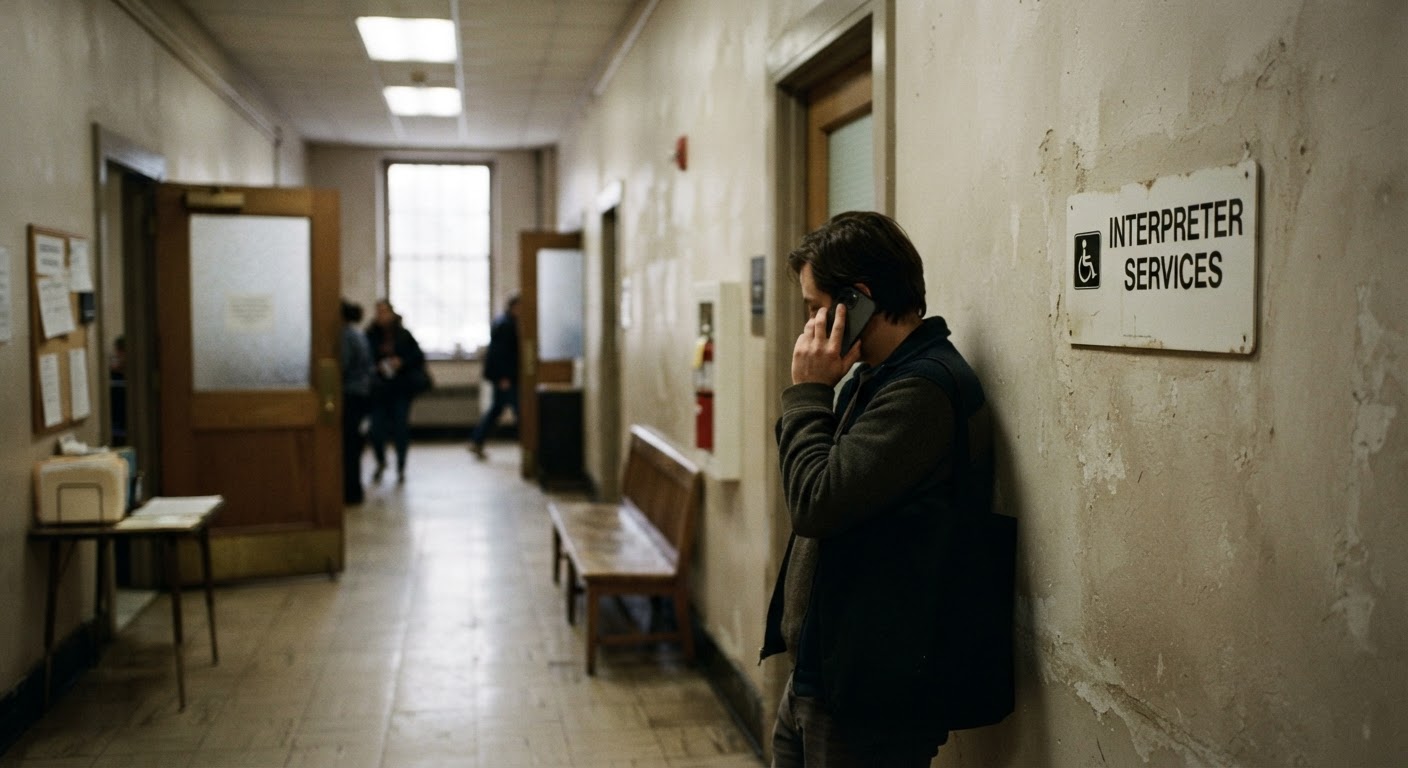
If you’re a caseworker or family member helping someone through this, your fastest move is often a three-way call: get the tenant on the line with you when you call the clerk or self-help center, so the request comes directly from the person who needs the interpreter, with you there to help communicate the specifics.