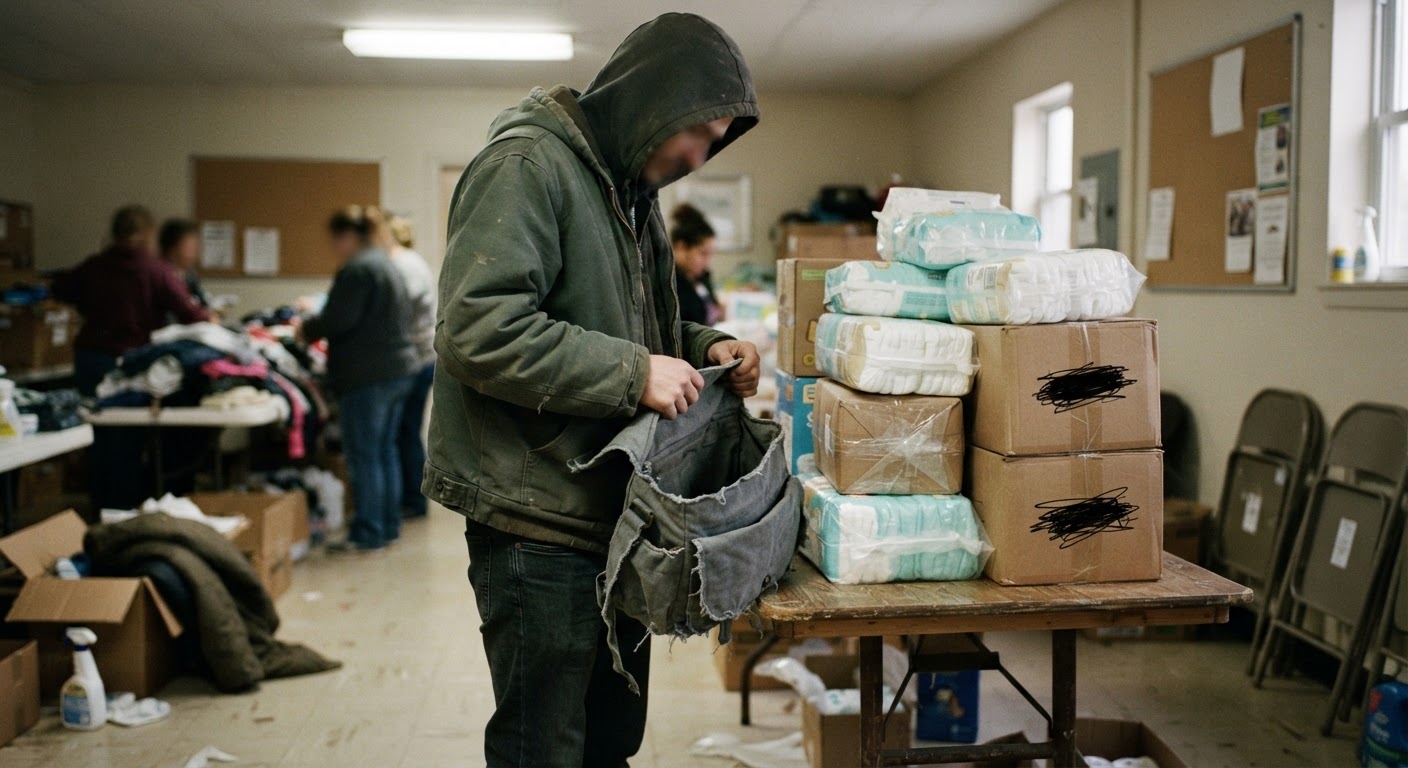
If you’ve counted the diapers left in the package and realized you’ll run out before payday, you’re not imagining a gap in the system — you’re standing in one. Diapers cost real money every week, and unlike formula or baby food, there’s no federal program built to cover them. The good news is that a parallel network of diaper banks, food pantries, and community organizations exists specifically to fill that hole, and many of them can get supplies into your hands the same day you ask.
Why diapers are excluded from SNAP and WIC and why that gap matters
SNAP benefits can only be used for food items, and WIC is structured around a specific list of nutrition-related products for infants and young children — formula, cereal, juice, and similar items. Diapers don’t fit either category, so no matter how tight your food budget is, those benefits can’t legally stretch to cover them. This isn’t a paperwork oversight you can appeal your way around; it’s how both programs are written.
The practical effect is that diapers become a pure out-of-pocket cost for families who are often already stretching every other dollar. A parent can be fully enrolled in SNAP and WIC, doing everything right, and still hit a wall the week diapers are due. That’s exactly the gap that diaper banks were created to close, so if you’re in this spot, you haven’t failed at budgeting — you’ve run into a hole in the safety net that a lot of other people have run into too.
How to find a local diaper bank or diaper pantry today
Start with the National Diaper Bank Network. Their website has a searchable directory of member diaper banks organized by state and city, and most of these local banks distribute directly to families or partner with a nearby pantry, shelter, or clinic that does. Search by your zip code first — many banks serve a specific county or region, and the closest one may not be the one you’d guess.
If you don’t have time to search online, call 211. This is a free, confidential referral line available in most areas, and the people answering it are trained specifically to route emergency requests like this one. Tell them exactly what you need — “I need diapers today” — and they’ll give you the names and hours of the closest options, including ones that might not show up in a general web search.
Churches, especially those running food pantries, are worth a direct call even if you’re not a member and don’t attend services there. Many keep a small diaper supply specifically for walk-in emergencies and don’t require any religious affiliation to receive help. Homeless shelters and domestic violence shelters often do the same, even for families who aren’t currently staying there — a quick phone call asking “do you have an emergency diaper supply for walk-ins” will get you a fast yes or no.
What to do if the closest option is closed or out of stock
Ask whoever you reach — whether it’s 211, a pantry worker, or a diaper bank volunteer — for a second and third referral before you hang up. Diaper banks often know which of their neighboring programs restocked recently, and this kind of word-of-mouth routing is usually faster than searching again from scratch.
What to bring or say when requesting emergency diapers with no paperwork ready
Most diaper banks are built for exactly this situation — someone showing up with no documentation and an urgent need. You generally do not need proof of income, a state ID, or a referral letter to get a first-time emergency supply. If you have anything that shows your child’s age or size — a WIC card, a shot record, even a diaper box from home — bring it, because it helps staff hand you the right size faster. But don’t let missing paperwork stop you from going in.
When you call or arrive, keep it simple and specific: say your child’s age or weight, how many diapers you need to get through the next few days, and that this is an emergency, same-day request. Staff at these programs hear this every day and are not going to ask you to justify or explain how you got here. If a program does ask for documentation you don’t have, ask directly whether there’s a one-time exception for emergency situations — most have one, even if it’s not posted anywhere.
Stretching a limited supply safely until your next distribution day
If you’re waiting on a distribution date and counting diapers in the meantime, resist the urge to leave a diaper on longer than it should be worn, even a dry-looking one. Extended wear time increases the risk of rash and skin breakdown, and treating that afterward often costs more — in time, discomfort, and sometimes a medical visit — than the diapers would have.
Instead, check with the diaper bank or pantry about whether they offer cloth diapers or reusable liners as a bridge option; some programs keep a small supply specifically for families in a gap between distributions. If cloth isn’t available and you’re truly down to your last few, prioritize nighttime and outings, and use cut squares of an old t-shirt or a thin towel as a liner inside a diaper during the day at home to extend wear time without extending skin contact with waste. This is a stopgap, not a routine — the goal is to get you to your next supply point, not to make this diaper stretch a habit.
Other overlooked baby essentials you can request at the same visit
Diaper banks and pantries often carry more than diapers, but they don’t always advertise it, so ask directly. Baby wipes run out just as fast as diapers and are almost never covered by SNAP or WIC either. Formula is sometimes available even outside WIC allotments, particularly for brands or sizes that aren’t on your WIC list, or for families who’ve hit a temporary gap in enrollment. Baby wash, diaper rash cream, and even small sizes of infant clothing sometimes sit in the same supply closet as the diapers — you just have to ask what else they have on hand.
This is worth doing in one visit rather than several separate trips. Most programs would rather give you a fuller bag today than have you come back tomorrow for something you could have asked for now.
How to set up recurring help so this doesn’t become a monthly crisis again
Once you’ve gotten through the immediate emergency, ask the diaper bank staff directly whether they offer ongoing enrollment rather than one-time visits. Many diaper banks run a regular distribution schedule — weekly, biweekly, or monthly — for families who register once and then simply show up on their assigned day. Getting on that list turns this from a scramble into a routine pickup.
If the diaper bank you found is small or has limited stock, ask if they can refer you to a second program so you’re not relying on just one source. Some families split a month’s supply between two different pantries with different distribution schedules, which smooths out the gaps if one runs low or changes its hours. And if your circumstances shift — a new job, a change in household size, a move — call back and update your registration rather than waiting for the next emergency to resurface. A five-minute phone call now is almost always easier than another out-of-diapers scramble later.