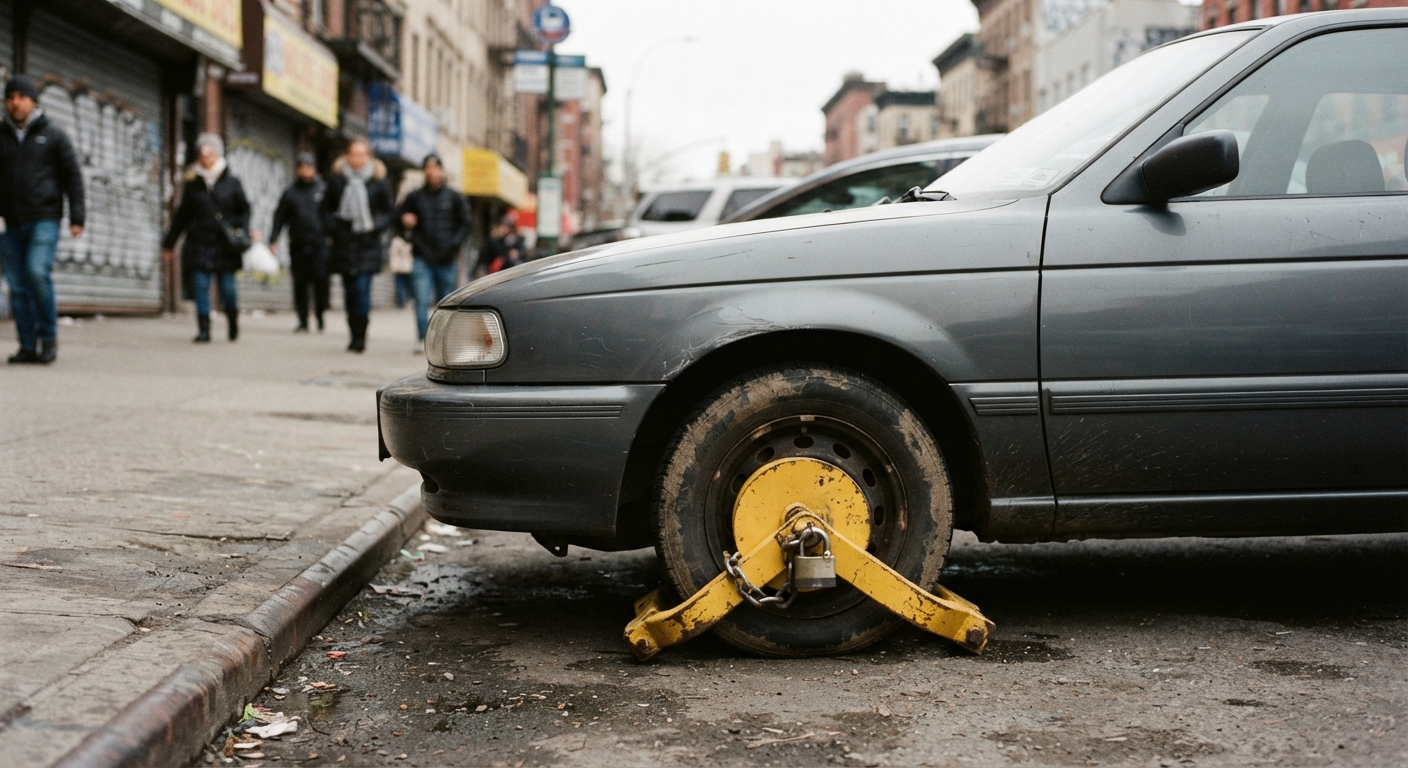
How booting differs legally from lender repossession and why your rights are different
A boot is not a repossession, and the difference matters for what you can do next. When a lender repossesses a car, it’s enforcing a private contract you signed, usually a loan agreement, and repo agents can take the vehicle without a court order in most states. A boot is different. It’s a government enforcement action, usually placed by a city, county, or parking authority, tied to unpaid tickets, tolls, or fines you owe to that government entity, not a lender.
That distinction gives you different tools. You can’t negotiate with a repo company the way you can sometimes negotiate with a city’s parking violations bureau. Government agencies that issue boots often have published administrative processes for payment plans, dispute hearings, and hardship considerations because they’re accountable to public rules in a way a private lender isn’t. It also means the person who put the boot on your car, and the person who can take it off, works for or contracts with a public agency. That’s usually a phone call or a walk-in office, not a courtroom.
The typical window before a booted car gets towed to an impound lot
Most cities don’t tow a booted car immediately. There’s usually a posted or stated window, often somewhere between 24 and 96 hours, during which the vehicle can sit with the boot on before a tow crew is dispatched to haul it to an impound lot. The exact window varies widely by city and even by which agency placed the boot, so the boot itself, the paperwork left on your windshield, or a sticker on the device usually tells you the deadline and a number to call.
Don’t assume you have the maximum window just because that’s what a friend experienced in a different city. Call the number on the boot or the notice as soon as you find it. Ask directly: how many hours until this gets towed, and what do I need to do to stop that from happening. Get the answer in writing or text if the office offers it, because verbal deadlines told to you at a counter can differ from what a tow crew is working off of.
Emergency options: partial payment plans, contesting disputed tickets, or hardship waivers offered by some cities
Full payment isn’t always required to get a boot removed. Many cities allow a partial payment, sometimes a set percentage of the total owed, to release the boot and put the remaining balance on a payment plan. This is worth asking about even if the office doesn’t advertise it up front. Ask specifically: “Is there a partial payment amount that releases the boot today?”
If some of the tickets are ones you believe were issued in error, wrong meter, wrong sign, expired registration that was actually current, say so now. Some cities will remove a boot conditionally while a specific disputed ticket is reviewed, especially if the disputed amount is what’s pushing your total over the threshold that triggered the boot in the first place. Ask if contesting one ticket can lower your balance below the boot threshold even temporarily.
Hardship waivers exist in some jurisdictions for people who can document income loss, disability, or public assistance status. These aren’t universal, and they usually require some proof, but they can reduce fees or extend deadlines. Ask the office directly whether a hardship reduction program exists, since it’s not always something staff volunteer unprompted.
Daily impound storage fees and why waiting even one extra day gets expensive fast
Once a car is towed to an impound lot, the math changes fast. In addition to the original fines, you’re now looking at a tow fee, typically charged once, plus a daily storage fee that accrues for every day the car sits on the lot. Storage fees are often billed per calendar day, not per 24-hour period, which means a car towed at 11pm and released at 8am the next morning can be billed for two full days of storage.
This is the core reason speed matters more than getting the “best” deal on payment terms. A boot that costs a set fine amount to release can turn into that same fine plus a tow charge plus a week of mounting storage fees if the car sits unclaimed while you shop around or wait for a callback. If you’re going to make any payment or negotiate any plan, do it before the tow truck arrives, not after.
How to check if your city allows fine reduction or community service in exchange for release
Some cities, particularly for older or accumulated tickets, allow fine amnesty programs, reduced settlement amounts, or community service in place of cash payment. These programs aren’t always running year-round, and they’re often tied to specific windows the city announces, so ask directly whether one is currently active rather than assuming there isn’t one because you haven’t heard of it.
If a community service option exists, ask how quickly it can be arranged and whether it releases the boot immediately or only after the service hours are completed. Some programs require the hours to be finished before release, which won’t help you in an emergency. Others let you enroll and get the boot removed the same day, with the service completed afterward. That detail changes whether this option helps you today or only helps with future tickets.
What to do if the boot was placed in error or on the wrong vehicle
Booting errors happen, wrong plate entered, a ticket that was already paid, a vehicle that was sold and re-registered under a new owner. If you believe the boot is a mistake, don’t wait for a hearing date. Call the number on the boot immediately and ask for an expedited review, explaining specifically why you believe it’s an error. Bring or describe any proof you have: a payment receipt, a bill of sale, a title transfer date, registration paperwork.
Ask whether an expedited error review can release the boot the same day, since many agencies distinguish between a formal dispute process, which can take weeks, and an error correction, which can sometimes be resolved same-day if the mistake is clear-cut and documented. If the office can’t resolve it immediately, ask what stops the tow clock while the error is being reviewed, so you’re not paying for a tow triggered by someone else’s data entry mistake.
Steps to take if you can’t pay at all: towing your own car, appealing fines, or requesting an emergency payment extension
If you genuinely can’t pay anything right now, you still have options that are better than doing nothing. Ask whether you’re allowed to arrange your own tow, using a company you choose, to move the booted car to a private location before the city’s tow deadline. Some cities allow this, and it avoids city impound fees, though the boot itself may need to stay on until fines are resolved, so ask what happens to the boot once the car is on private property.
You can also file a formal appeal on the underlying fines even if you can’t pay today. An open appeal sometimes pauses additional penalties or interest, and it puts your situation on record before the deadline passes, which matters if you need to explain the timeline later.
Finally, ask explicitly for an emergency payment extension, using those words. Some offices have a formal short extension process, often a matter of days, specifically for people who need slightly more time to gather funds, separate from a full payment plan. It’s not guaranteed, but asking costs nothing and it’s the fastest way to find out if it exists in your city before the tow truck shows up.