Why water shutoffs are handled differently than gas or electric
If you’ve dealt with a utility shutoff before, you might expect water to work the same way electric or gas does. It usually doesn’t. Water service is often run by a city or county public works department rather than a regulated private utility, which means the rules that protect you from a winter heat shutoff or require extended notice periods frequently don’t apply. There may be no cold-weather moratorium, no mandatory 30-day notice, and no state utility commission you can appeal to.
This matters because it changes your timeline. A gas or electric shutoff notice often gives you weeks and multiple required contact attempts. A water shutoff notice from a municipal provider can move in a matter of days, with far less bureaucratic friction standing between the notice and the actual disconnection. Treat a water shutoff notice as more urgent than a comparable gas or electric one, not less.
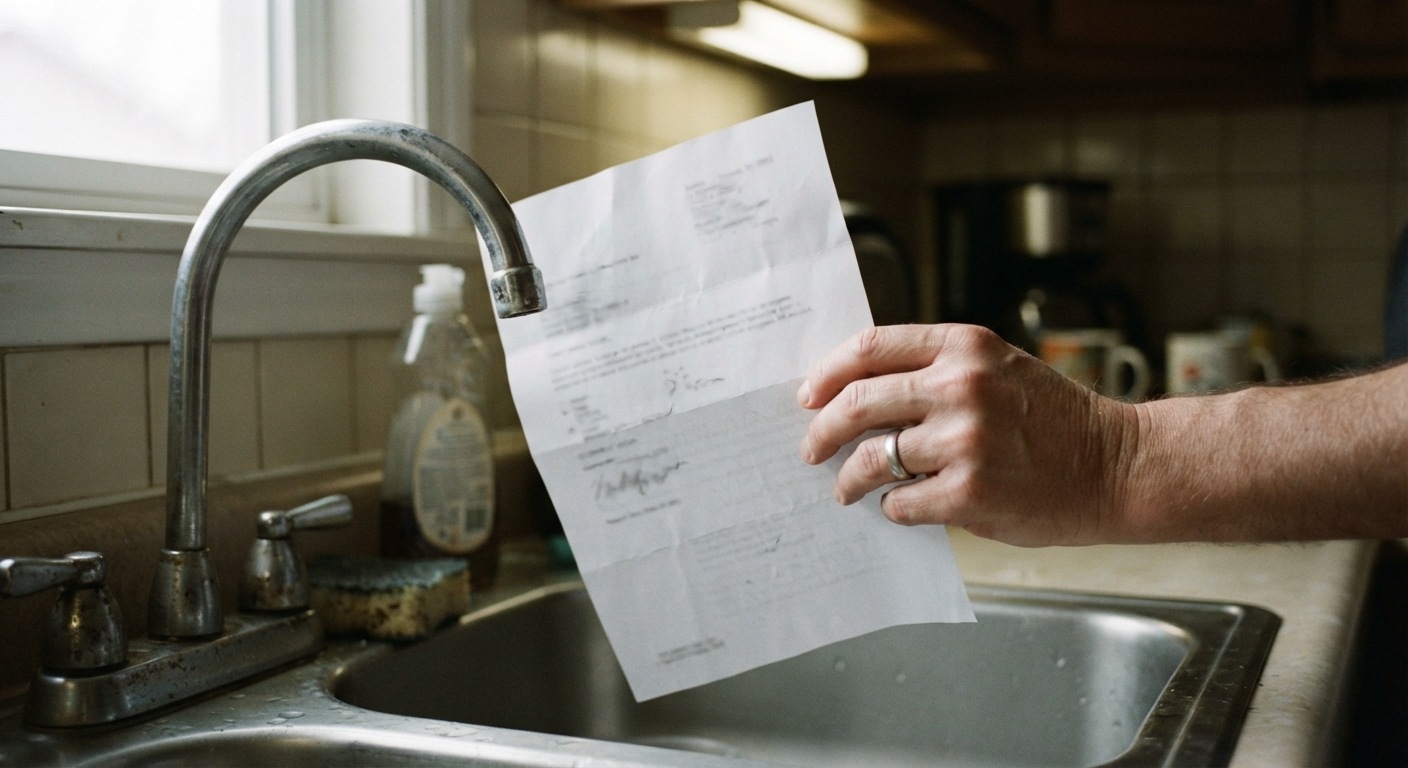
How to read your notice: grace period, fees, and health flags
Before you do anything else, sit down with the notice and find three pieces of information.
The grace period. Look for the actual shutoff date, not the date the notice was printed or mailed. Some notices list both, and the gap between them can already have eaten several days.
The reconnection fee. Most water departments charge a flat fee to turn service back on, and some add a deposit requirement if this isn’t your first shutoff. Knowing this number now helps you figure out the real total you need to raise, not just the overdue balance.
Any boil-water or health department flag. Occasionally a shutoff notice will reference a separate water quality or health department hold on the property. If you see any language about water quality, contamination, or a health department order, that’s a different process than a simple nonpayment shutoff and may need a call to the health department directly, not just the billing office.
Emergency water assistance programs
A federally supported program for water bill assistance, generally known by the acronym LIHWAP, exists to help households facing exactly this situation, and many states and counties run parallel local programs with their own names. These programs are built for speed compared to other assistance channels, because water shutoffs are recognized as an urgent health risk.
To move quickly, call 211 or search for your county or city’s community action agency. Ask specifically for “emergency water bill assistance” rather than general utility assistance, since intake staff route these requests differently. Have your account number, the shutoff date, and your household size ready when you call. Some programs can issue a payment directly to the water department within days if you can show the shutoff notice and a form of income documentation. If you’re a caseworker or shelter staff member calling on someone’s behalf, ask whether a signed release or a three-way call with the client is required to process the request.
What renters can do if the bill is in the landlord’s name
In many buildings, water service is billed to the property owner and covers multiple units, which means a single unpaid bill can threaten to cut off water for every tenant in the building, not just the household that fell behind. If this describes your situation, you have a different set of moves than an individual account holder.
First, put your concern in writing to the landlord or property manager, even if you’ve already spoken by phone, so there’s a dated record that you raised it. Second, contact your local housing authority or tenant rights organization to ask whether your jurisdiction has a rule requiring landlords to maintain water service regardless of billing disputes, since some cities do. Third, if the shutoff appears imminent and affects the whole building, that’s worth flagging to the water department directly and to local code enforcement, since a building-wide shutoff is often treated as a more serious habitability issue than a single-account nonpayment case.
Health and safety exemptions
Many water utilities maintain a medical or vulnerability-based exemption or delay process, even when it isn’t advertised prominently. Households with infants, someone who is pregnant, a person with a documented medical condition requiring water access, or an elderly or disabled resident may qualify for a temporary hold on the shutoff while a payment plan or assistance application is processed.
If this applies to you, call the water department’s customer service line and ask directly whether a medical or vulnerable-household delay exists, and what documentation they need. A short note from a doctor or clinic confirming a medical need can sometimes be enough. Don’t wait for the shutoff to happen before asking. This process works best as a delay tactic before disconnection, not as a way to force reconnection afterward.
Requesting a short-term payment plan before the shutoff date
Water departments frequently have more flexibility to set up a payment plan than their notices suggest, but you generally have to ask before the disconnection date, not after. Call the number on your notice and ask specifically for a “payment arrangement” or “extension,” and be ready to propose a concrete plan: a partial payment now and the remainder over a set number of weeks.
Ask these three questions directly: What is the minimum payment needed today to stop the shutoff? Can the remaining balance be spread over multiple billing cycles? Will setting up a plan affect any assistance application you have pending elsewhere? Get the agreement in whatever form the department offers, whether that’s an email confirmation, a reference number, or a written letter, and keep it somewhere you can find it quickly.
If the water is cut off anyway
If the shutoff happens before you can resolve it, your first priority is safe drinking water and basic sanitation for the next 24 to 48 hours. Local emergency management offices, food banks, and community action agencies often have bottled water on hand for exactly this situation, and some fire departments will provide emergency water access. Calling 211 remains the fastest way to find what’s available near you right now.
Once immediate needs are covered, focus on reconnection. Ask the water department the exact dollar amount required to restore service, including any reconnection fee, and whether that amount can be paid partially with an assistance voucher and partially by you. If an assistance program already had your application in process when the shutoff occurred, tell the intake worker immediately, since some programs can expedite a case that’s already open rather than starting from the beginning.