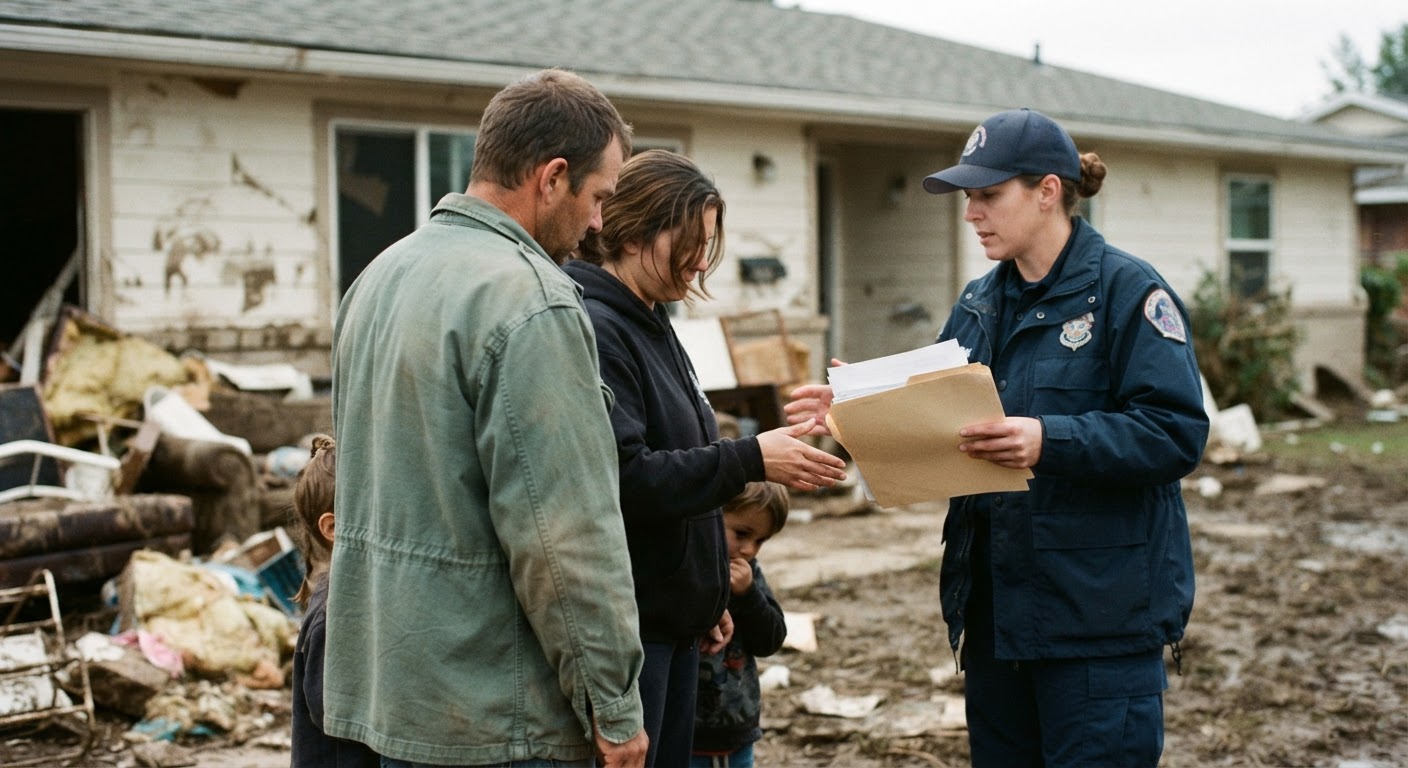
Why This Is Different From an Eviction
If you’re reading this because smoke damage or floodwater made your home unlivable overnight, you’re not fighting a landlord over back rent or a lease violation. There’s no notice to contest and no court date to prepare for. But the urgency is the same, and in some ways sharper: you need a safe place to sleep tonight, and you need it without the paperwork trail that usually comes before a housing crisis. Disaster displacement moves fast and the help for it moves on a different track than eviction assistance. Knowing which door to knock on first saves you hours you don’t have.
First Calls to Make Within Hours
Start with the American Red Cross local chapter or their national line. They coordinate emergency shelter, and after a house fire or flood they’re often the fastest source of a bed for the night, a hot meal, and basic supplies. Next, call your local emergency management office or the non-emergency line for your fire department if you haven’t already spoken with responding crews — they can tell you whether a shelter has already been opened for your incident and whether your block has additional resources staged.
If you rent, call your landlord or property manager the same night if at all possible, even if it’s just a voicemail. You want a timestamp on when you notified them the unit became unlivable. If you own or rent and have insurance, call your insurer’s claims line that night too. Most carriers have 24-hour claim reporting, and starting the clock early matters for both emergency payments and the deadline windows described later in this article.
Getting a Red-Tagged or Condemned Notice Reviewed
After significant fire or flood damage, a building inspector may post a red or yellow tag on the door, or the property may be formally condemned. A red tag typically means no entry at all, even to retrieve belongings, until a follow-up inspection clears it. A yellow tag usually allows limited, escorted entry. Ask the inspector or fire marshal on scene how to request a re-inspection and roughly how long that process takes — it varies by jurisdiction and by the extent of damage, so don’t assume a timeline. If you need something specific from inside, like medication or a car key, ask whether an escorted retrieval can be arranged rather than waiting for the full re-inspection.
Emergency Shelter, Hotel Vouchers, and Same-Day Case Management
Beyond the Red Cross, ask emergency management or 211 (a free referral line in many regions) about disaster case management programs. These often assign you a single point of contact who tracks your situation and connects you to hotel vouchers, clothing, food, and follow-up housing help without you having to re-explain your story to five different agencies. If a shelter isn’t a good fit — because of medical needs, family size, or pets — ask specifically about hotel or motel voucher programs, which are frequently available after house fires even when a general shelter is the only option advertised publicly. Local United Way chapters and houses of worship sometimes have small emergency funds that move faster than larger agencies for exactly this kind of gap night.
Replacing ID, Medication, and Essential Documents
You don’t need your physical ID card to get emergency shelter or a hotel voucher tonight — case workers and shelters are used to serving people who walked out with nothing. For medication, a pharmacist can often do an emergency refill when you explain the situation, even before your prescribing doctor’s office opens; most pharmacy chains have a disaster or emergency refill protocol. For a replacement driver’s license or state ID, most motor vehicle agencies have an expedited or online replacement process — you’ll generally need to know your ID number or have another form of identification, so ask a case worker or shelter staff to help you figure out what you have access to. If your Social Security card, birth certificate, or immigration documents were lost, ask your disaster case manager where to start; they’ve replaced these before and can usually point you to the correct office without you having to research it yourself in the middle of a crisis.
How Renters Insurance “Loss of Use” Coverage Works
If you have renters insurance, check your policy for “loss of use” or “additional living expenses” coverage. This portion of the policy is designed for exactly this moment — it reimburses reasonable costs for temporary housing, meals above your normal food budget, and sometimes storage, while your unit is uninhabitable. Call your insurer’s claims line and ask directly: “Is my policy triggering loss of use coverage, and can you advance funds for a hotel now?” Many insurers can issue an advance payment within a day or two once a claim is opened, rather than waiting for the full claim to be settled. Keep every receipt from the moment you’re displaced — hotel, food, transportation — because loss of use reimbursement is receipt-based.
If You Have No Insurance and No Savings
If there’s no renters or homeowners policy in place, your two main avenues are FEMA Individual Assistance and local disaster relief funds. FEMA assistance typically becomes available once a federal disaster declaration covers your area, which doesn’t happen for every house fire or localized flood — it’s usually reserved for larger-scale events. Ask emergency management on scene whether your incident qualifies or is likely to be declared. Separately, ask about local disaster relief funds run by community foundations, the Red Cross, or faith-based organizations, which often help with single-family losses that don’t meet the threshold for federal declarations. A disaster case manager can tell you within a conversation or two which of these paths actually applies to your situation, so lean on them rather than guessing.
Keeping Your Lease and Deposit Protected
While you’re displaced, put your notice to the landlord in writing — a text or email restating what you said on the phone works fine — including the date the unit became unlivable and that you were displaced by fire or flood damage, not by choice. This creates a record that the uninhabitability wasn’t something you caused or could have prevented, which matters later for questions about rent obligations during the repair period and the return of your deposit. Take or request photos of the damage if you’re able to safely access the property or if the landlord, inspector, or fire department can share theirs. Don’t sign anything releasing your rights to the unit or the deposit until you’ve had a chance to think it through, even if the landlord is eager to close things out quickly.
Timeline for Filing Claims Before Deadlines Close
Insurance policies and disaster aid programs both carry filing windows, and they’re not the same length. Open your insurance claim within the first day or two even if you don’t have every detail yet — you can add information as it comes in, but a late-reported claim can complicate reimbursement. If a FEMA declaration applies to your area, ask your case worker or check with emergency management about the current application deadline, since it’s set per disaster and changes with each event. The same goes for local relief funds, which sometimes have limited pools of money distributed on a first-come basis rather than a fixed cutoff date. When in doubt, apply to every program you might qualify for now and let each agency tell you if you don’t fit, rather than waiting until you’re sure.