Why some programs are restricted by status and others explicitly are not
Assistance programs get their money from different places, and that’s usually what decides whether they ask for a Social Security number. Federal programs like SNAP or federally subsidized housing assistance are tied to eligibility rules set by law, and many of those rules do require proof of status for at least one household member. That’s not true across the board, and it’s not true at all for programs funded by private donations, religious congregations, foundations, or local city and county general funds.
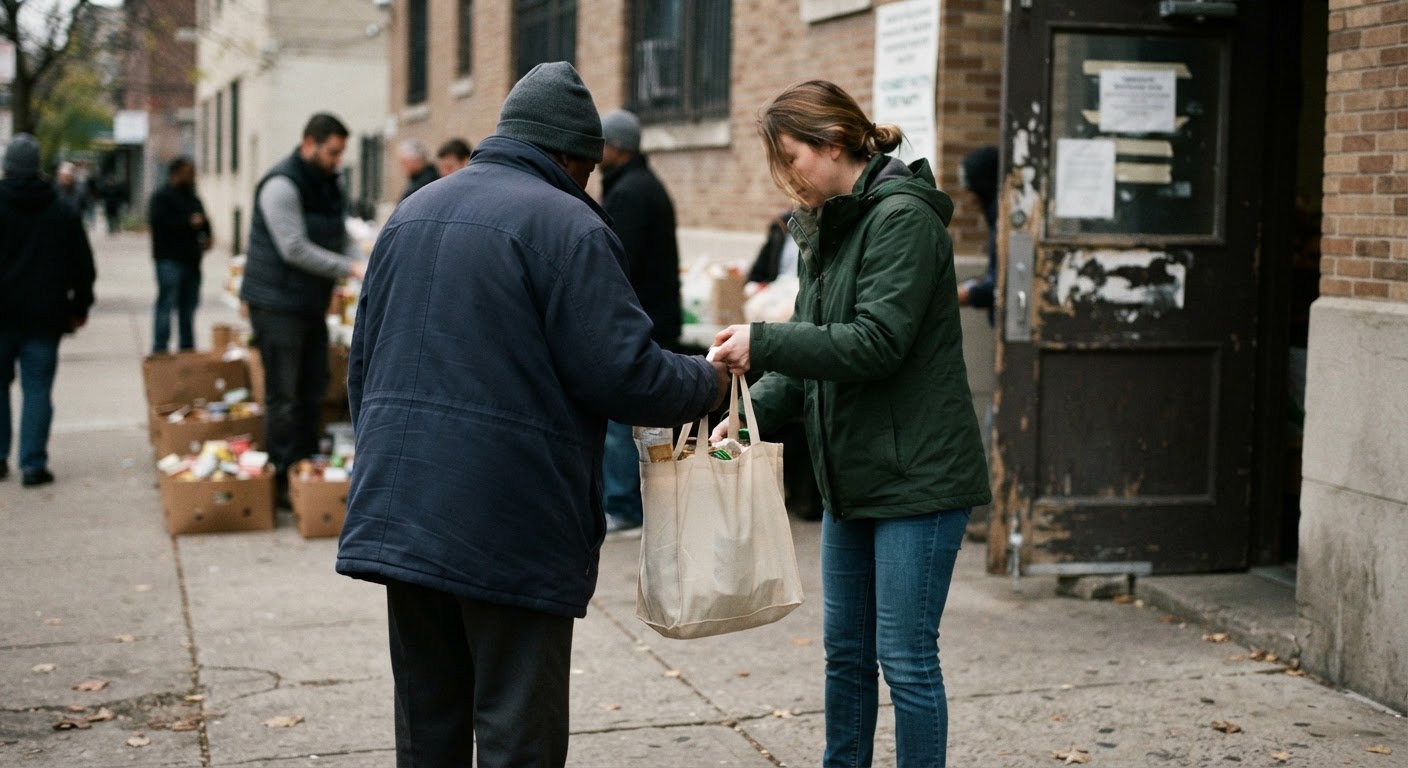
Food pantries, mutual aid groups, community fridges, and many emergency cash funds are not spending federal dollars, so they’re not bound by federal eligibility rules. They set their own intake process, and a lot of them have deliberately chosen not to ask about immigration status or collect a Social Security number, because their mission is to get help to whoever is in front of them. Some do this quietly without announcing it, which is why it’s worth asking directly rather than assuming a program is off-limits.
Knowing this distinction helps you spend your time efficiently. If a program is federally funded, don’t waste an afternoon calling around trying to find a workaround. If it’s privately or locally funded, it’s worth a call before you cross it off your list.
Food pantries, community fridges, and mutual aid networks that ask no questions
Most food pantries run through churches, food banks, and community centers do not require identification of any kind to receive a box of food. Many will ask for a household size and zip code just to track how much food they’re distributing, but this is usually self-reported and not verified against any document. If a pantry near you does ask for ID, it’s often just to confirm you live in the service area, and a piece of mail or a transit pass can work as well as a driver’s license.
Community fridges are even simpler. These are refrigerators, usually outdoors and stocked by neighbors and local groups, where anyone can take food at any hour with no sign-in and no conversation required. They’re not everywhere, but where they exist, they’re one of the fastest ways to get food today with zero paperwork.
Mutual aid networks, often organized through local social media groups or messaging apps, connect people directly with neighbors who have food, cash, or goods to share. These groups typically run on trust rather than documentation. You post what you need, someone responds, and the exchange happens directly. Response times vary, but in many cities these networks move faster than any formal agency because there’s no intake form to fill out first.
If you’re not sure what exists near you, calling 211 (available in most regions by phone or text) is a fast way to get a list of pantries and fridges without having to explain your immigration status or answer questions you’re not comfortable answering.
Emergency cash funds run by churches, nonprofits, and immigrant-serving organizations
Small emergency cash funds exist specifically to cover a shutoff notice, a partial rent payment, or a bus ticket, and many are run by organizations that serve immigrant communities as a core part of their mission. These groups typically don’t ask for a Social Security number because a large share of the people they help don’t have one, and requiring it would defeat the purpose of the fund.
Catholic Charities, Jewish Family Services, Lutheran Social Services, and similar faith-affiliated nonprofits operate in most metro areas and often have small discretionary funds for exactly this kind of emergency, regardless of the religion or status of the person asking. Immigrant-serving legal and community organizations frequently maintain their own emergency funds too, sometimes specifically for cash assistance rather than legal services.
These funds tend to be limited and can run out partway through a month, so it helps to call rather than just showing up, and to be ready to briefly explain what the money is for and how much you need. Being specific and realistic in your request, rather than describing your entire situation, tends to get a faster answer.
How to safely inquire without providing more information than required
You are allowed to ask questions before you give any personal information. A simple opening line works well: “Before I share any details, can you tell me what information you require to receive help?” This puts the intake worker in the position of naming their actual requirements, rather than you guessing and volunteering more than needed.
It also helps to ask specifically whether they require a Social Security number, a specific type of photo ID, or proof of immigration status, and whether there are alternatives. Many organizations that don’t require an SSN will still ask for some form of identity confirmation, just a more flexible one. Getting this answer up front saves you a wasted trip and lets you bring the right document the first time.
If a staff member seems unsure or gives you a vague answer, it’s reasonable to ask to speak with a supervisor or case manager, since front-line staff don’t always know the full range of what their organization can flex on. You’re not being difficult by asking; you’re making sure you don’t hand over information unnecessarily.
What to bring instead of an SSN: ID alternatives that are usually accepted
Most organizations that skip the Social Security number requirement will still want some way to confirm who you are and, sometimes, that you live in their service area. Common alternatives include a foreign passport, a consular ID card issued by your country’s consulate, a municipal or community ID card if your city issues one, a school ID for a child in the household, or a piece of mail addressed to you at a local address.
Some programs will accept a signed self-attestation, meaning you state your name, household size, and need in writing, and that’s treated as sufficient. Others may ask for nothing at all beyond your word and a brief conversation. It varies enough by organization that it’s worth keeping two or three of these documents on hand rather than assuming you’ll be turned away without a driver’s license or Social Security card.
If you truly have no documents at all, say so plainly rather than avoiding the appointment. Many caseworkers have seen this exact situation many times and have a workaround they can use once they know that’s where you stand.
Building a short list of trusted local contacts before the next emergency hits
Once you’ve found even one or two organizations that helped you without asking for a Social Security number, write down their name, phone number, and what they were able to provide. This list becomes valuable the next time a bill comes due faster than you expected, because you won’t be starting the search from zero under pressure.
It’s worth adding to this list gradually: the food pantry that never asked questions, the church that had a small cash fund, the community group active in your neighborhood chat, and the 211 number for your region. Share this list with anyone in your household who might need to make the call when you can’t, whether that’s a partner, an older child, or a friend.
Caseworkers and shelter staff helping someone in this situation can build the same kind of list for their service area and keep it updated, since these small funds and informal networks shift over time as funding runs out or new groups start up. A short, current list beats a long search every time someone walks in needing help today.