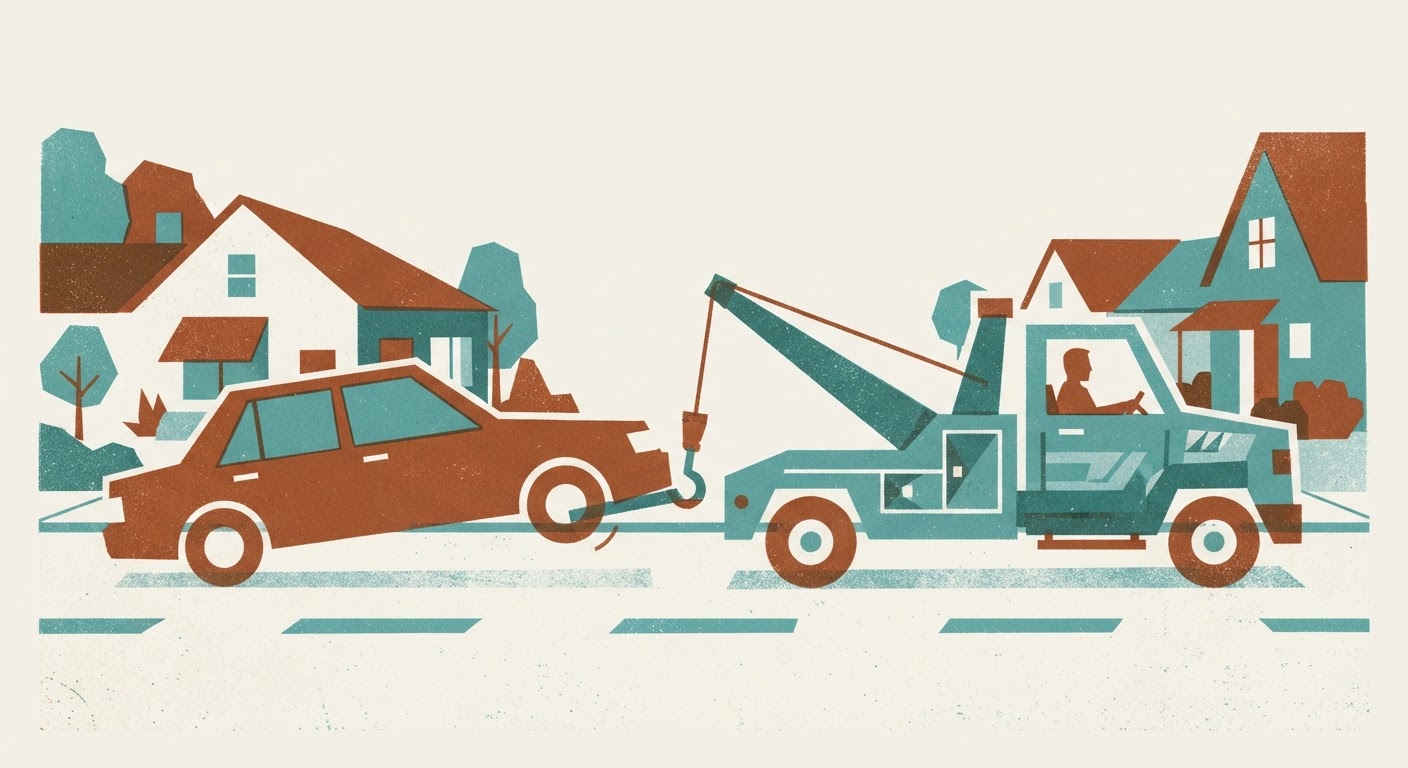
Once your loan is far enough behind that the lender has authorized repossession, the clock you’re working against isn’t days or weeks anymore. It’s hours. Repossession agents work off a list, they get paid per vehicle recovered, and they have no reason to wait. This is what’s actually happening behind the scenes, and what you can still do about it right now.
How repossession actually works once it’s authorized
Most auto loans allow the lender to repossess as soon as you’re in default, which in many contracts means missing a single payment. In practice, lenders usually wait longer than that because repossession is expensive and they’d rather collect. But once an account has been flagged internally for repossession, it gets handed off to a third-party recovery company. That company doesn’t work for you and doesn’t know your situation. They know an address, a vehicle description, and a deadline to bring the car in.
A few things matter here:
- Notice requirements vary by state. Some states require the lender to notify you before repossessing; others don’t require any warning at all. Don’t assume you’re protected by a notice period — check your state’s rules or ask a local legal aid office today, not after the car is gone.
- Once it’s authorized, the recovery company can move fast. They can typically take the car from a driveway, a street, or a parking lot without confronting you, as long as they don’t breach the peace (break into a locked garage, physically block you, or use force).
- The lender can usually call off the repossession at any point before the car is actually towed — and sometimes even after, though that gets more complicated and costly. This is the leverage point you have.
The order matters: the lender controls the recovery company, not the other way around. If you can get the lender to issue a hold or a stop order, the agent has to back off. That’s why your first move isn’t to hide the car or argue with a tow driver — it’s to get the lender on the phone.
The direct call to make to your lender’s loss mitigation department
Every auto lender of any size has a department that handles delinquent accounts before and during repossession — sometimes called loss mitigation, sometimes collections, sometimes “special assets.” The person who answers your lender’s general customer service line usually cannot stop a repossession. You need the department that has authority to issue a hold.
When you call:
- Say directly that you know repossession has been authorized and you want to know if a hold can be placed today. Don’t lead with an apology or a long explanation. Lead with the ask.
- Ask specifically: “Can you place a repossession hold while we work out a reinstatement?” That phrase — repossession hold — is language they recognize internally and it prompts a specific process on their end, rather than a generic “let me pull up your account.”
- Get the name of the person you spoke with, the date, and a reference or case number for the call. Holds sometimes fail to get logged correctly, and if a tow truck shows up anyway, you want proof you had an agreement in place.
- Ask what the hold buys you in terms of time. A hold might be good for 24 hours, 48 hours, or until a specific payment date. Get the exact expiration in writing if at all possible — a text, an email, a portal message — anything besides a verbal promise.
If the first person you reach says a hold isn’t possible, ask to be transferred to a supervisor or to the loss mitigation team specifically, rather than accepting that answer from the first line of support. Recovery holds are a normal, routine request for these departments — you are not asking for anything unusual.
What a reinstatement or catch-up payment offer needs to include
A hold buys time, but it doesn’t fix the underlying default. To actually stop repossession, the lender generally needs a reinstatement plan — an agreement about how you’ll bring the account current, or at least current enough that they’re willing to stand down.
When you make your offer, be specific rather than vague. A vague promise (“I’ll pay soon”) gives them nothing to act on. A concrete offer does. Try to include:
- The exact amount you can pay, and by when. If you can pay something today and the rest within a few days, say both numbers and both dates.
- Where the money is coming from. If it’s a paycheck landing this week, a tax refund, help from family, or a program payment, say so. Lenders are more willing to hold when the payment source is real and near-term rather than hypothetical.
- A request for the reinstatement amount in writing. The amount needed to reinstate often includes not just the missed payment but late fees and sometimes repossession-related costs already incurred. Get the number in writing so there’s no dispute later about whether you paid enough.
- A backup plan if you fall short. If you can only cover part of what’s owed, ask directly whether a partial payment plus a firm date for the rest is enough to hold the repossession, or whether they need the full reinstatement amount before they’ll call it off. Some lenders will accept a partial payment as a good-faith gesture; others won’t move until the full amount is in.
If you genuinely cannot pay anything in the near term, ask about deferment or extension options instead of reinstatement — some lenders can push a payment or two to the back of the loan. This doesn’t work with every lender or every account, but it costs nothing to ask, and it’s a different conversation than reinstatement, so name it specifically.
What to remove from the car today just in case
Even with a hold in place, plan as though the car could still be taken today. Recovery agents are not responsible for personal property left inside the vehicle, and getting it back afterward can mean a delay of days and sometimes a fee. Go through the car now and remove:
- Identification documents, registration, insurance cards, and any paperwork with personal information
- Medication, glasses, medical devices, or anything you need daily
- Car seats, chargers, work equipment, tools, or anything needed for a job
- Cash, electronics, and anything of clear value
- House keys, garage remotes, or spare keys left in the car
Take photos of the vehicle’s condition, mileage, and interior before anything happens — this matters if there’s ever a dispute about damage, mileage, or missing property after a repossession. If the car does get taken despite a hold you were promised, that documentation, along with the name and reference number from your loss mitigation call, is what you’ll use to push back.
Above all, keep working the phone. A held repossession is not a solved problem, it’s a paused one — the goal now is to convert that pause into an actual reinstatement before the hold expires.