Why lenders and repo agents don’t treat “lived-in” vehicles differently by default
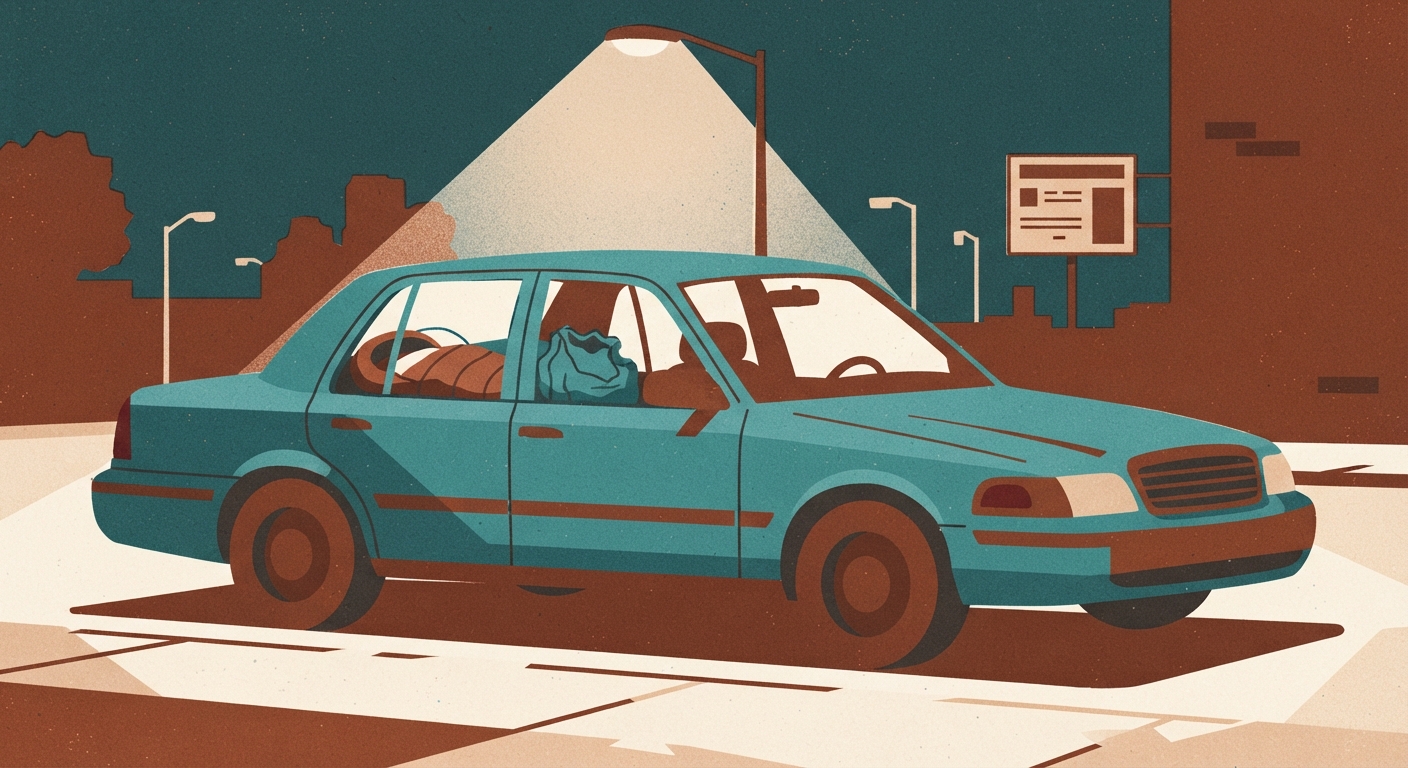
A repossession company’s job is to locate a vehicle, confirm the VIN, and tow it. Nothing in that process asks whether someone is sleeping in the backseat or keeping every possession they own in the trunk. The lender’s contract gives them the right to reclaim the car once you’re in default, and most state laws let them do it without a court order or advance notice, as long as they don’t “breach the peace” — meaning no physical confrontation, no breaking into a locked garage, nothing like that. Parking on a public street with someone asleep inside doesn’t usually count as a barrier that stops them.
This matters because a lot of people in this situation assume that because the car is their only shelter, there must be some special protection. There usually isn’t, at least not automatically. Any protection you get comes from you asking for it, documenting your situation, and sometimes from a court after the fact — not from the repo agent showing restraint on their own.
Immediate steps if you get a repo warning and have nowhere else to sleep
If you’ve received a notice — a letter, a call, a text saying the account is being referred for repossession — treat the next 24 to 72 hours as the window where you have the most leverage. Once the car is gone, your options shrink fast.
Start by gathering anything that proves the vehicle is your residence: mail addressed to you at that vehicle’s usual parking location if you use one, a caseworker letter, a shelter intake denial, anything dated and specific. This won’t stop a repossession by itself, but it becomes important later if you need to argue hardship to the lender or explain your situation to a shelter or legal aid office.
Move essential documents — ID, Social Security card, birth certificates, medical records, any benefits paperwork — into a bag you keep on your person, not in the car. If the vehicle disappears while you’re getting food or using a restroom, you don’t want your identification disappearing with it.
Call 211 or your local human services line the same day. Ask specifically for emergency shelter with vehicle owners in mind or safe-parking programs — not just general shelter listings. Some areas have very limited overnight capacity, and slots fill by evening.
What legally has to happen to your personal belongings if the vehicle is taken
In most states, a lender or repo company cannot simply keep or throw away your personal property that was inside the vehicle. They’re generally required to inventory what’s inside and hold it for a set period, giving you a chance to retrieve it — often by contacting the lender or the towing company directly. The exact holding period and process vary by state, so don’t assume a specific number of days; call and ask.
What this means practically: if the car is towed, your first calls should be to the lender (to get the name of the repossession company) and then to that company directly, asking where your belongings are being held and what you need to bring to get them back. Bring ID. Ask if there’s a deadline. Write down the name of whoever you speak with and the date.
If anything valuable or medically necessary was in that vehicle — medication, mobility aids, work tools — say so explicitly and ask for expedited retrieval. Some companies will move faster on medication or medical equipment than on general belongings.
Emergency shelter and safe-parking programs to line up before repo day
Don’t wait until the car is gone to look for shelter. Do it as soon as you get any repossession warning, even if you’re hoping to stop it.
Safe-parking programs — lots run by churches, nonprofits, or city governments where people can sleep in their vehicles overnight with some basic security — exist in some cities but not others, and they don’t help you once the car itself is taken. Still, being enrolled in one can sometimes support a hardship case with the lender, since it shows you have a documented living arrangement tied to the vehicle.
Call local shelters directly, not just the intake line, and ask two things: do they have any beds available tonight, and do they have a program or referral for someone who may lose their vehicle in the next few days. Ask if there’s a waitlist you can get on now rather than after the fact.
If you have any connection to a case manager — through a hospital, a veterans program, a school your kids attend, a food pantry — call them today. Case managers often know about openings and emergency funds that aren’t listed publicly, and they can sometimes make calls on your behalf that get faster responses than you’d get alone.
Scripts for calling the lender to explain hardship and buy time
Lenders would generally rather work out a delay than pay for towing, storage, and resale of a car that’s worth less than what’s owed. Use that.
Try something like: “I’m calling about my account. I know I’m behind, and I want to work out a plan before this goes to repossession. This vehicle is also where I live right now, and I need a little time to arrange another option. Can we talk about a short extension or a modified payment while I do that?”
If they ask for specifics, be honest but brief: how far behind you are, what you can pay and when, and that you’re actively working on shelter. You don’t need to over-explain or apologize repeatedly — state the situation and ask for the specific thing you want, whether that’s 10 more days, a partial payment plan, or a hold while you contact a legal aid office.
Ask directly: “Can you put a temporary hold on the repossession referral while we work this out?” Get any agreement in writing — an email or text confirmation, not just a verbal yes. If they say no, ask what the actual timeline is before the car is towed, so you’re not guessing.
Where to go the same night if it’s already gone
If the repossession has already happened, don’t spend the night trying to solve everything at once. Prioritize immediate safety first.
Call 211 again or go directly to the nearest shelter and say plainly: “My vehicle was just repossessed and it was my only housing. I need a bed tonight.” Being specific and direct tends to get faster placement than a general request.
If shelters are full, ask about hotel voucher programs — some counties and nonprofits keep emergency funds for exactly this situation, even if they’re not widely advertised. A 24-hour crisis line, a hospital social worker, or a police non-emergency line can sometimes point you to same-night options you wouldn’t find searching alone.
Tomorrow, follow up on your belongings, call legal aid about your rights regarding the vehicle and any remaining debt, and keep the paperwork from tonight — shelter intake forms, any texts with the lender. You’re not just surviving tonight; you’re building the record you’ll need for whatever comes next.