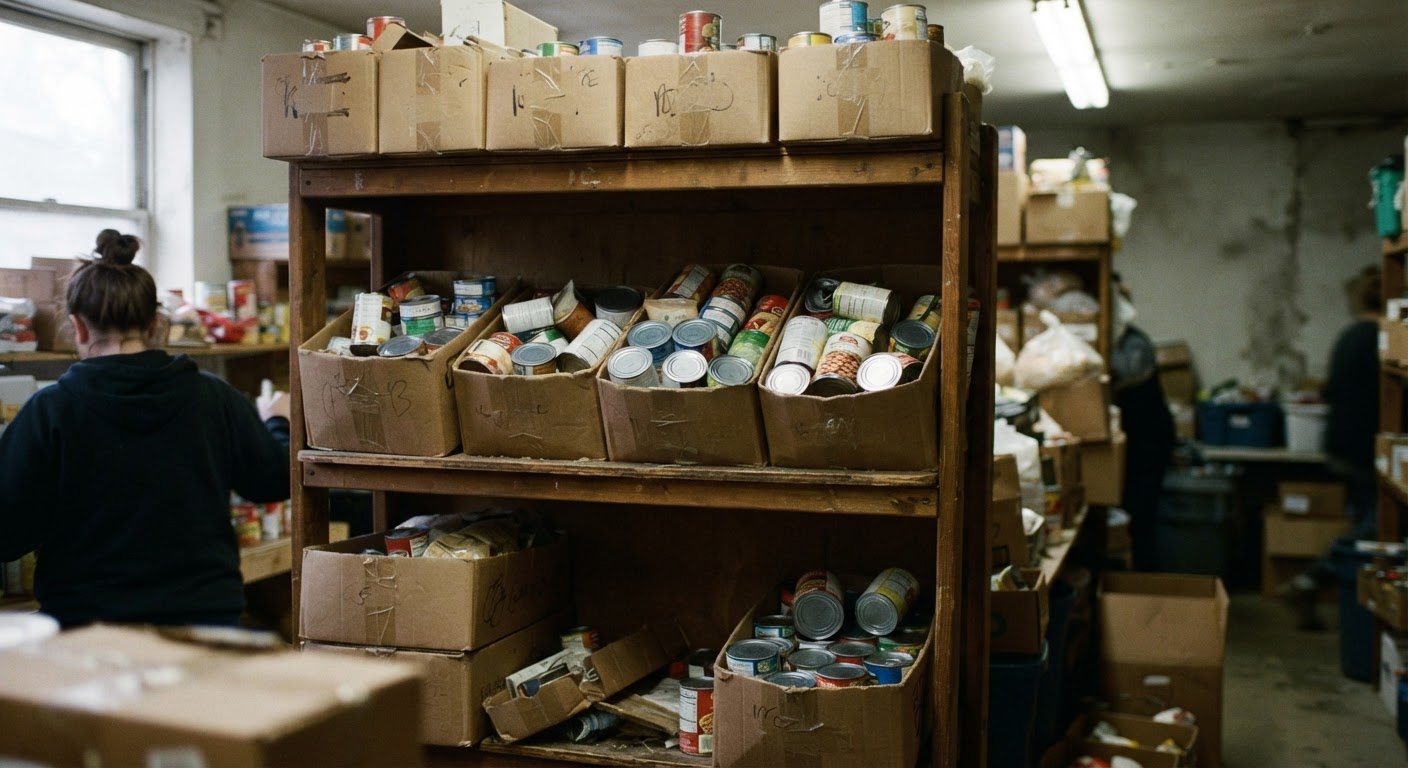
If you’re reading this because the kitchen is empty and there’s no money coming in until later this week, skip the parts of the internet that tell you to “plan ahead” or “build a stockpile.” You need food today. Here’s how to get it, in order of speed.
Same-day food resources: pantries, soup kitchens, and mobile food banks
Three types of places give out food same-day, no appointment needed in most cases:
- Food pantries — usually run out of churches, community centers, or standalone nonprofits. Most operate a few days a week with set hours, and many let you walk in and leave with a bag of groceries in under 20 minutes.
- Soup kitchens / community meal programs — these serve a hot, ready-to-eat meal on-site, often for breakfast, lunch, or dinner. No groceries to prepare, no cooking required. This is the fastest option if you need to eat within the hour.
- Mobile food banks — trucks that set up in parking lots, schools, or community centers on a rotating schedule, usually once or twice a month in a given location. If one happens to be nearby today, it can move a lot of food quickly, but the timing has to line up.
To find what’s operating near you right now, try these in order:
- Search “food pantry near me open today” directly — many pantries list same-day hours on Google’s business listing even if their website is outdated.
- Check your regional food bank’s website. Most metro areas and counties have one central food bank that coordinates a network of smaller pantries and publishes a searchable map with hours and eligibility notes. This is usually more accurate than a general web search.
- Call a nearby church or community center directly, even if you’re not a member and don’t attend. Many run informal food distribution that isn’t well indexed online, and staff often know about other same-day options nearby even if they can’t help you themselves.
Call 211: the fastest routing tool you’re not using
In most of the United States, dialing 211 connects you to a live person trained specifically to route people to same-day help — food, shelter, utility assistance, and crisis services. It’s free, it works from a cell phone, and it’s typically available around the clock or close to it, though hours can vary slightly by region.
Here’s why this is often faster than searching online yourself: 211 operators have real-time information that doesn’t always make it onto websites — which pantry ran out of food this morning, which one just got a delivery, which soup kitchen extended its hours today. They also know about resources that don’t advertise widely, like a school handing out weekend food bags or a small mutual aid group operating out of someone’s garage.
When you call, be direct and specific:
- Say “I need food today” — not “I’m looking into food assistance.” Urgency changes how they route you.
- Give your exact location — a cross street or zip code, not just a city name. They’ll match you to the closest option, and “closest” matters when you’re relying on walking or one tank of gas.
- Ask if anything is open right now, specifically. Some listings are technically “current” but reflect the pantry’s regular schedule, not today’s status.
- If the first option doesn’t work out — closed, out of food, wrong hours — call back. Operators can offer a second and third option; you don’t get one shot.
If 211 isn’t available in your area or the line is busy, most states also have a health and human services hotline that can route food requests. A quick search for “[your state] emergency food assistance hotline” will usually surface it.
What to bring so you’re not turned away at intake
Most pantries want to help you and will work with you even if you don’t have everything on this list — but showing up prepared means less back-and-forth and a faster exit with food in hand.
- Photo ID for yourself. If you have ID for other household members, bring that too, but many pantries only require one.
- Proof of address if you have it easily accessible — a piece of mail, a lease, a utility bill. Not all pantries require this, and some serve anyone regardless of address, but having it prevents delays where it is required.
- A rough headcount of how many people you’re feeding, including kids and their ages. Pantries often size the food bag to the household, so this speeds up the process rather than slows it.
- Bags or a box to carry food home in. Some pantries provide bags; many don’t. Bringing your own means you’re not stuck juggling loose cans on the walk or drive home.
If you don’t have ID, don’t have proof of address, or don’t have anyone with you who does — go anyway. Tell them at the door exactly what’s going on. Emergency food distribution generally errs toward feeding people, not toward paperwork enforcement, and many pantries have a process for exactly this situation. The worst outcome is being told to come back with something specific, which still leaves you better off than not showing up at all.
Backup options if pantries near you are closed today
If it’s a weekend, a holiday, or you’ve just had bad luck with timing, here’s what to try next:
- Call 211 again and ask specifically about soup kitchens or meal sites, not pantries. Meal programs sometimes run on different days or later hours than grocery-style pantries.
- Check with a hospital or shelter front desk.</strong ) Many keep a small emergency food supply on hand for exactly this kind of situation, even if they’re not a formal food distribution site. It costs nothing to ask.
- Look at school district resources if you have kids. Many districts run weekend or holiday food backpack programs, and some extend informal help to families who ask directly at the school office.
- Try a nearby faith community outside your own, if you have one. Congregations frequently keep informal emergency food on hand for anyone who asks, regardless of membership or belief.
- Ask a neighbor or a local community Facebook or Nextdoor group if you’re comfortable doing so. Mutual aid networks in many areas can move faster than any formal system, sometimes within the hour.
One last thing worth knowing: none of this is a one-time-only resource. If you need food today, you’re allowed to need it again next week while the rest of your situation gets sorted out. Use what’s here today, and use 211 again the next time it’s tight — that’s exactly what it’s there for.